
You have a buyer. They have seen the car, they are happy with the price, and they want to sort the paperwork this weekend. Then the roadworthy comes up.
Selling a car in Victoria almost always means handing the buyer a roadworthy certificate. If the car is registered and you are selling it privately, you need to provide a current certificate, and VicRoads will not process the transfer without one. A roadworthy certificate, or RWC, is a document from a licensed vehicle tester confirming your car met minimum safety standards on the day it was checked. There are exceptions, and they are worth knowing before you book anything.
The rule follows the car’s registration rather than its age or price. A twenty-year-old hatchback and a two-year-old SUV are treated the same way. What does change the answer is the type of transfer.
You need a certificate for:
– A registered car sold privately, whatever its age, price or condition.
– A registered car transferred to a child, parent or sibling. That transfer is not on the exemption list.
– A car going back on the road after the registration has lapsed. The certificate is part of registering it again.
You do not need one for:
– A registered car transferred to a spouse or domestic partner.
– A car sold unregistered, including one sold for parts or scrap. If the buyer ever wants it back on the road, the certificate becomes their job.
– A trade-in to a dealer. A licensed motor car trader has to give their own buyer a current certificate. So the dealer normally handles it and prices any repairs into the offer. Get that in writing before you sign.
– A vehicle on the VicRoads exemption list. That covers brand new vehicles never registered anywhere, light trailers and new heavy trailers, and machines not built mainly to carry people or goods, such as tractors and forklifts. The motorcycle exemptions are limited to recreational bikes, farm bike scheme bikes and quad bikes.
Caravans and trailers follow their own set of rules, and that is a longer story than this article can do justice.
Yes, but not as a normal registered sale.
The practical route is to sell the car unregistered. You cancel the registration, take the plates off, and the roadworthy becomes the buyer’s problem. They cannot simply transfer the rego and drive away. They need to get the car through an inspection and register it before normal road use, or apply for an unregistered vehicle permit to move it.
That changes the deal. Your buyer pool narrows and the price usually drops, because you have handed the buyer a cost and a job at the same time.
What does not work is a side agreement. If the sale is a registered one, the buyer promising to sort the certificate out later will not get the transfer through. Selling to someone interstate is a related case. VicRoads suggests cancelling the registration and taking the plates off, rather than trying to transfer a Victorian rego across the border.
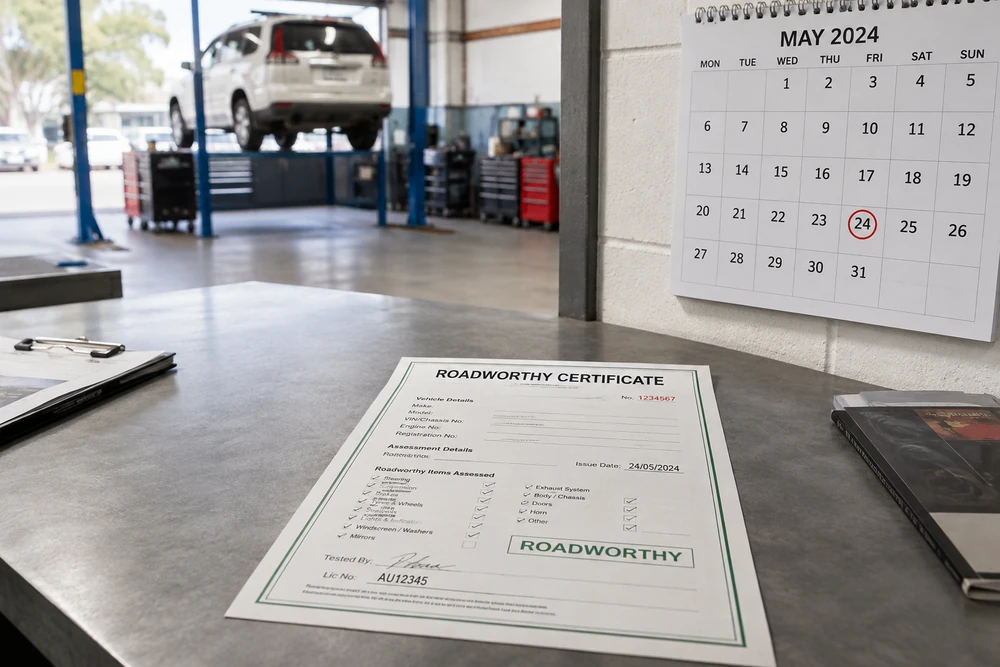
An RWC in Victoria is current for 30 days from the date it is issued. Not 30 days from the sale, and not 30 days from when the buyer turns up. The same certificate can be used more than once inside that window.
Thirty days sounds generous. It stops sounding generous once you put a real sale against it. A car listed on a Saturday might take two weeks to attract a serious buyer. Add a few days for them to arrange the money. Add a few more before either of you gets to the paperwork. If the certificate was issued before the ad went up, it can run out with the sale half done.
Passing the test does not freeze the car in that condition either. A brake light can fail the day after the inspection. The certificate says the car met the standard on the day it was checked, and nothing beyond that.
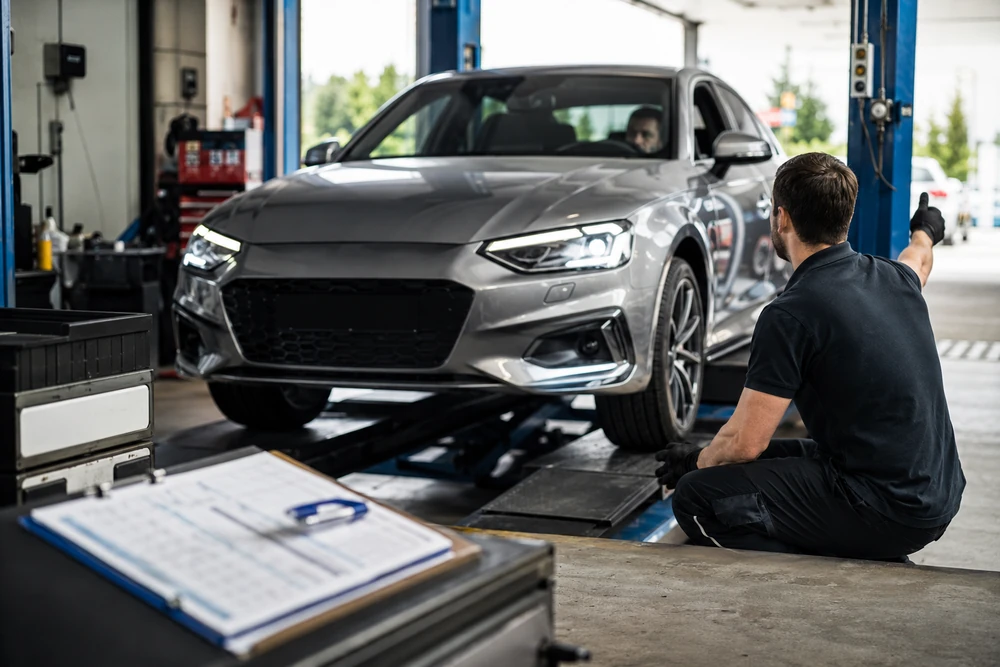
The goal is not the earliest possible certificate. The goal is a certificate that is still current on the day the transfer goes through.
That usually means running the sale in this order:
– First, deal with the obvious problems before you book the formal test. Tyres, wiper blades, blown globes and a chipped windscreen are the cheap ones to catch early.
– Next, list the car and find out whether the interest is real. Enquiries are not offers.
– Once a buyer looks serious, book the inspection. Leave a few days spare in case something needs fixing.
– Then complete the transfer while the certificate is still inside its 30 days.
The order people regret is the opposite one. List first, wait, then rush the inspection after the buyer is ready to pay. If the car fails at that point, you are asking someone with cash in hand to wait while you organise repairs. Some of them will not wait.
Same-day inspections are common across Melbourne’s south-east, so the test itself is rarely what holds a sale up. The repairs found on the day are.
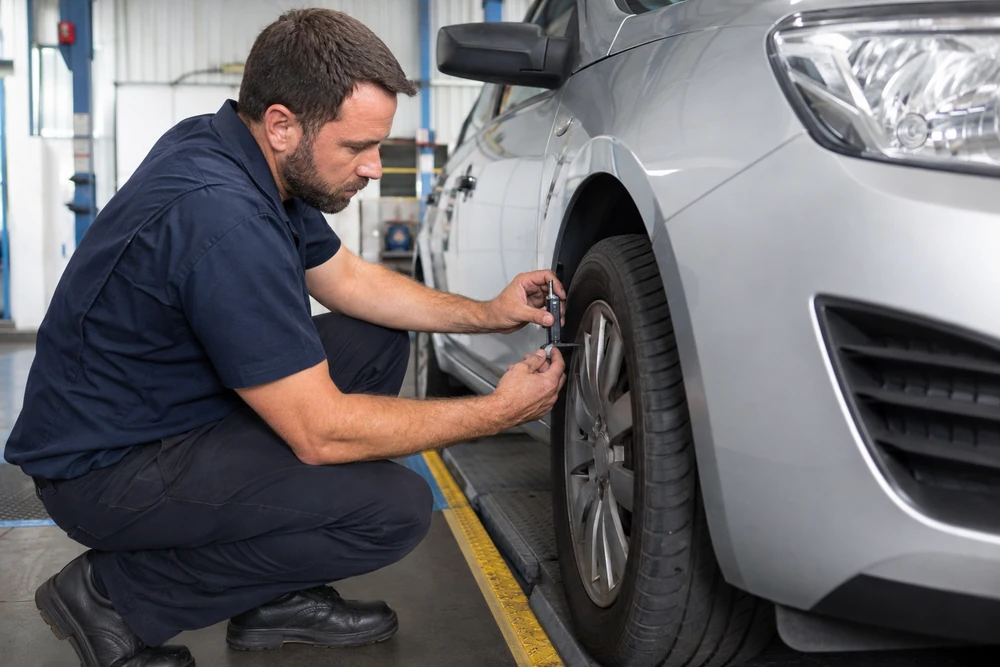
A roadworthy inspection is a safety check against a set list. A licensed vehicle tester looks at:
– wheels and tyres
– steering, suspension and brakes
– seats and seatbelts
– lights and reflectors
– the windscreen, windows, wipers and washers
– the structure of the car, plus other safety-related items on the body, chassis and engine
There is a fuller breakdown in our guide to preparing for a roadworthy inspection. It sets out the checks worth doing yourself before the booking.
What the test leaves out matters just as much when you are selling. It says nothing about the air conditioning, the electric windows, the engine or the gearbox. Buyers often read "has a roadworthy" as "has nothing wrong with it". It does not mean that. Say so plainly when you hand the certificate over.
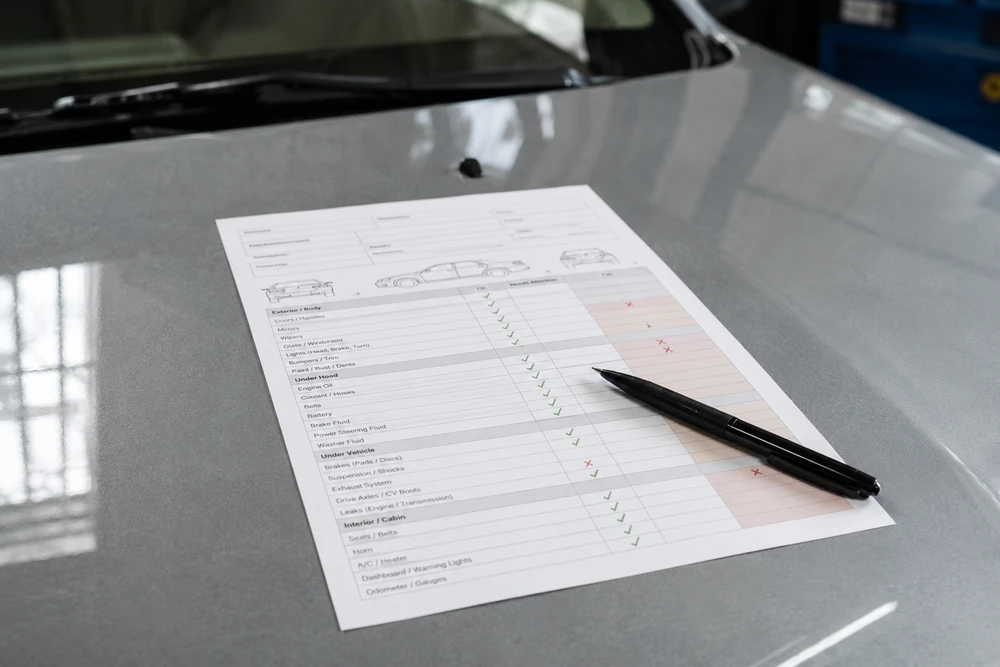
A fail is common and it does not end the sale.
The tester gives you a report listing what needs fixing. You then have 14 days to repair those items and go back for a re-check with the licensed vehicle tester who did the first inspection. Go back inside that window and you do not pay the full fee again. Leave it longer than 14 days and you are paying for a new test.
One thing worth clearing up: some workshops advertise a shorter free re-check, often seven days. That is a workshop policy, not the Victorian rule. The rule is 14 days.
If the report is vague, ask which component failed and what the tester saw. You need that detail before you can get a sensible quote. Some items come up far more often than others. The common reasons cars fail a roadworthy are worth reading before you book.
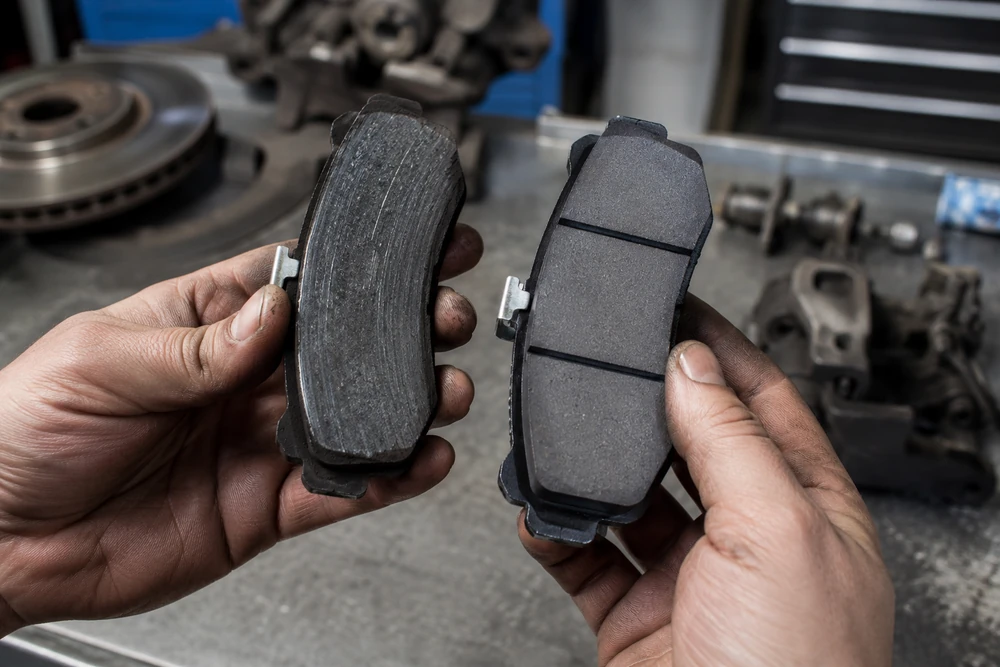
Transport Victoria tells sellers to ask their licensed vehicle tester for a quote, because the price depends on the vehicle and the workshop.
| What you are paying for | Typical Australian range* | What moves the price |
|---|---|---|
| The inspection itself | $150 to $250 | Vehicle type, age and the workshop’s own rate |
| Globes and wiper blades | $15 to $100 | Wiper blades sit at the bottom. A globe needing the headlight assembly removed sits at the top |
| Tyres, each | $100 to $300 | Tyre size and brand; tread must be at least 1.5mm |
| Brake pads, per axle | $150 to $400 | Rises sharply if the rotors also need doing |
| Windscreen replacement | $300 to $800 | Higher where cameras behind the glass need recalibrating |
| Steering and suspension parts | $100 to $500 | Bushes sit at the lower end, ball joints at the upper. Each joint is priced separately |
* General Australian market ranges, not prices quoted by ZPro Automotive.
The inspection is the small, predictable number. The repairs are what move. A car that has been serviced on time usually passes with a globe or a wiper blade. A car that has been left alone for three years can turn a $200 inspection into a four-figure bill.
There is one more piece of timing that catches sellers out. Once the car changes hands, you have 14 days to tell VicRoads with a notice of disposal. Miss it and fines or tolls run up by the new owner can still land on you.
So the useful move is simple. Book the test while the sale is close but not yet done, leaving room for repairs. That single decision protects the 30-day window. It also stops a buyer drifting away while you sort out a ball joint, which is the part of selling a car in Victoria that most often goes wrong.
If you are selling in the south-east, ZPro Automotive is a VicRoads licensed vehicle tester and can carry out roadworthy inspections in Rowville, including any repairs the test turns up.
Only if the car is unregistered, or the transfer is an exempt one, such as a vehicle on the VicRoads exemption list or a transfer to a spouse. On a normal registered sale the transfer will not go through without a current certificate.
The certificate lapses 30 days after issue, whatever stage your sale has reached. If the transfer has not been lodged by then, you are paying for a fresh inspection.
On a private sale of a registered car the cost sits with the seller, because the seller is the one who has to supply the certificate. A trade-in works differently, since the dealer carries that obligation to whoever buys the car next.
You get a written list of the faults and a fortnight to deal with them. Returning to the tester who did the original inspection inside that fortnight saves you paying the full fee a second time.
No. It covers the safety items on the tester’s list, on the day of the test. Anything outside that list, from the air conditioning to the engine, is not part of the assessment.
Only if the car is unregistered, or the transfer is an exempt one, such as a vehicle on the VicRoads exemption list or a transfer to a spouse. On a normal registered sale the transfer will not go through without a current certificate.
The certificate lapses 30 days after issue, whatever stage your sale has reached. If the transfer has not been lodged by then, you are paying for a fresh inspection.
On a private sale of a registered car the cost sits with the seller, because the seller is the one who has to supply the certificate. A trade-in works differently, since the dealer carries that obligation to whoever buys the car next.
You get a written list of the faults and a fortnight to deal with them. Returning to the tester who did the original inspection inside that fortnight saves you paying the full fee a second time.
No. It covers the safety items on the tester’s list, on the day of the test. Anything outside that list, from the air conditioning to the engine, is not part of the assessment.

