A set of tyres on a family car in Melbourne’s outer south-east will do a lot of work.
School runs through Rowville, weekend trips to the Dandenongs, the odd freeway haul to the city. On those roads, in those conditions, a good set of tyres should last comfortably between services. When they do not, most people assume the tyres were the problem.
They rarely are. Uneven tyre wear is almost always a symptom. The cause is somewhere else in the car, usually in the alignment geometry, the suspension components, or both. The mistake that costs owners money is replacing the tyres without confirming why they wore that way. If the root cause is still there when the new rubber goes on, the new set will wear the same way. The owner pays for tyres twice and still has not fixed the car.
This is a guide to reading what your tyres are telling you, understanding whether the issue is alignment or suspension, and knowing what confirms the diagnosis before you spend money on replacements.
What makes tyres wear unevenly
Tyres wear from three mechanical forces: load, angle, and movement. In a car where everything is healthy, those forces are distributed evenly and the tread wears down flat across its width. When something changes, the wear pattern changes with it.
There are three broad categories of cause:
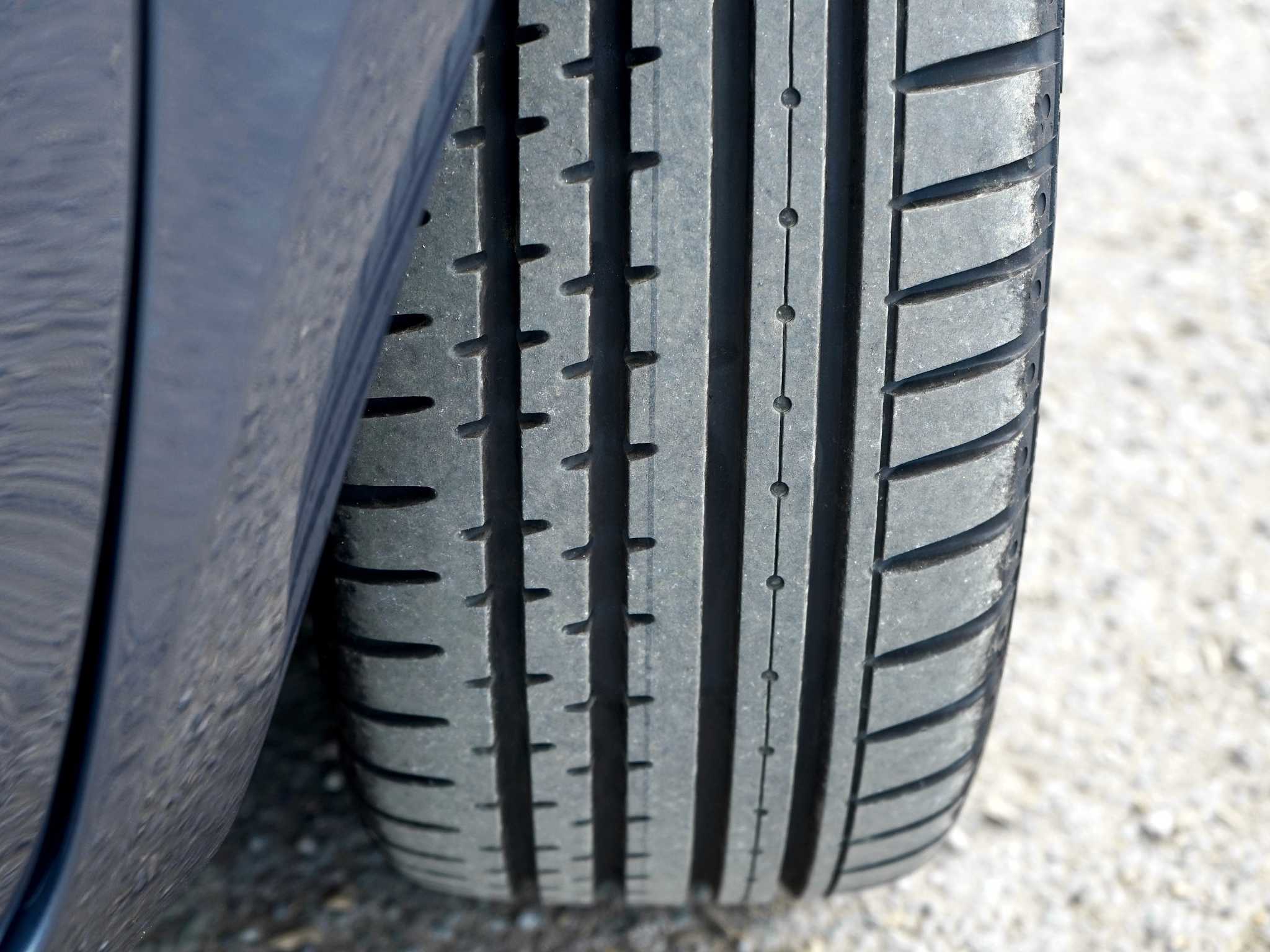
The critical distinction is between alignment and suspension. Alignment sets the static geometry. Suspension holds that geometry stable under real driving conditions. If something in the suspension is loose or worn, correcting the alignment alone will not solve the problem.
What each wear pattern means
| Wear pattern | What it looks like | Most common cause | What confirms it |
|---|---|---|---|
| Inner edge wear (both tyres, same axle) | Smooth wear along inside shoulder | Excessive negative camber or toe-out | Alignment printout showing camber or toe outside spec. No play in ball joints, bushes, or tie rods |
| Outer edge wear (both tyres) | Smooth wear on outer shoulder | Excessive positive camber or toe-in | Alignment printout confirming angles out of spec. Suspension components tight under load |
| One-sided inner wear (single tyre) | Only one tyre worn on inside edge | Bent component or asymmetric camber | Cross-camber reading on alignment. Inspection for bent strut, control arm, or subframe shift |
| Feathering across tread | Tread blocks sharp on one side, smooth on the other | Incorrect toe setting | Alignment printout showing toe out of range. Road test confirms no looseness or wander |
| Cupping or scalloping | Dips or scalloped hollows around tread face | Worn shock absorbers or loose bushes | Shock absorber test, inspection for leaking dampers, pry-bar check for bush play |
| Diagonal wear patch | Angled wear band running across tread | Loose suspension arm or bush movement | Pry-bar check for control arm bush movement under load. Alignment readings unstable |
| Centre wear | Tread worn down centre strip | Over-inflation | Tyre pressure history. Even wear across both tyres. No alignment fault present |
| Both edges worn, centre intact | Wear on both shoulders with tread remaining in centre | Under-inflation | Pressure check and service history. No abnormal alignment readings |
A note on factory settings: some vehicles run factory negative camber from new and will show mild inner wear even when within specification. The question is whether the wear is excessive and progressive.
Why the alignment-versus-suspension distinction matters
This is where the money is. An alignment sets camber, caster, and toe. But it assumes the suspension components hold those angles steady once the car is back on the road.
If a lower control arm bush is worn, the alignment can read perfectly on the hoist. As soon as the car drives over a speed hump on Kelletts Road or loads up through a roundabout, that bush allows the angle to shift. The alignment numbers were correct at the time of measurement. They are no longer correct under real driving loads.
This is how owners end up with new tyres wearing unevenly within 10,000 to 15,000 km. The alignment was done. The suspension was not inspected. The cause was never addressed.
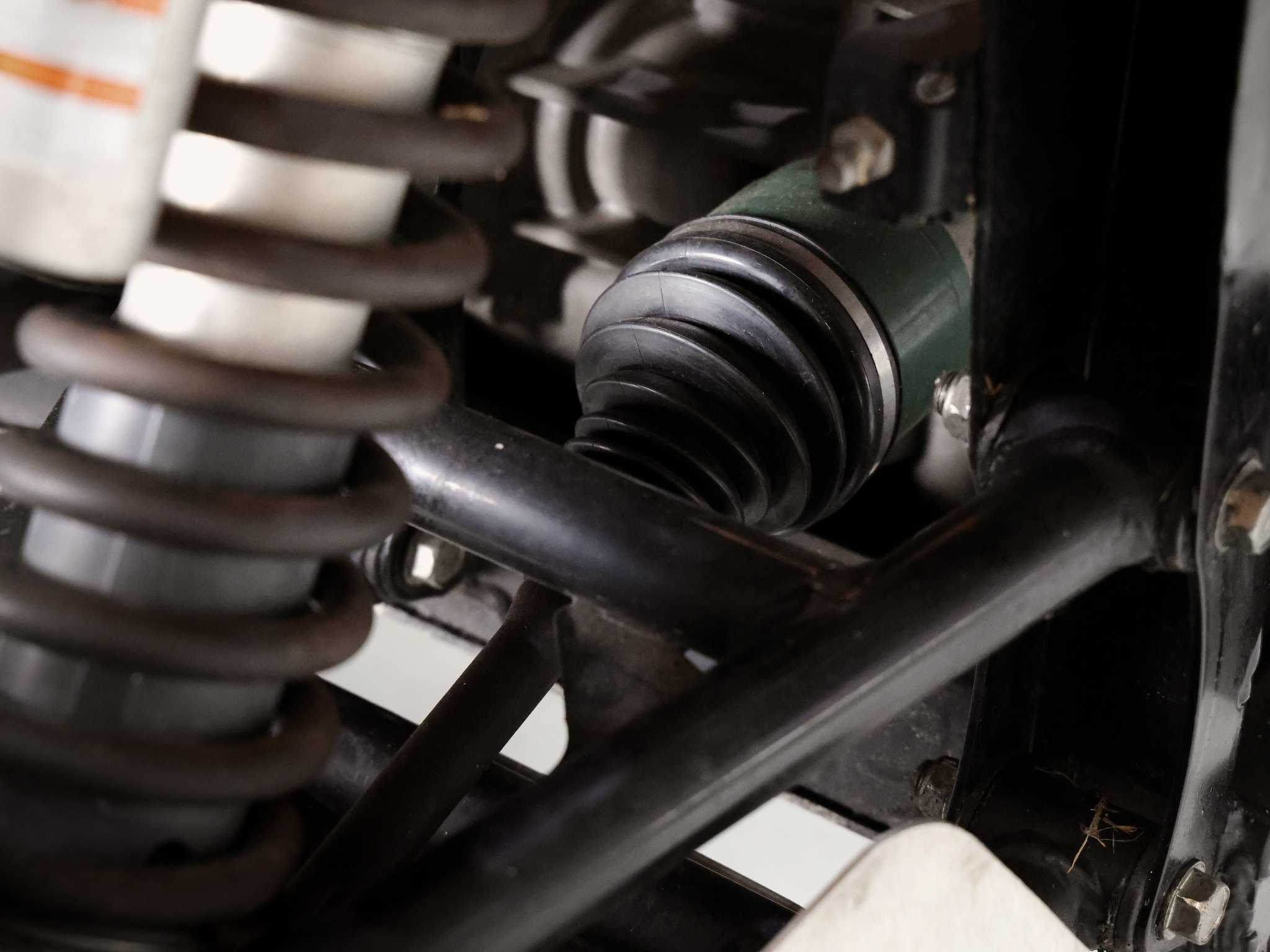
Getting the order wrong is the expensive mistake. Aligning a car with worn suspension is like straightening a picture on a wall that is not plumb. It looks right for a moment and then it drifts.
How alignment is confirmed
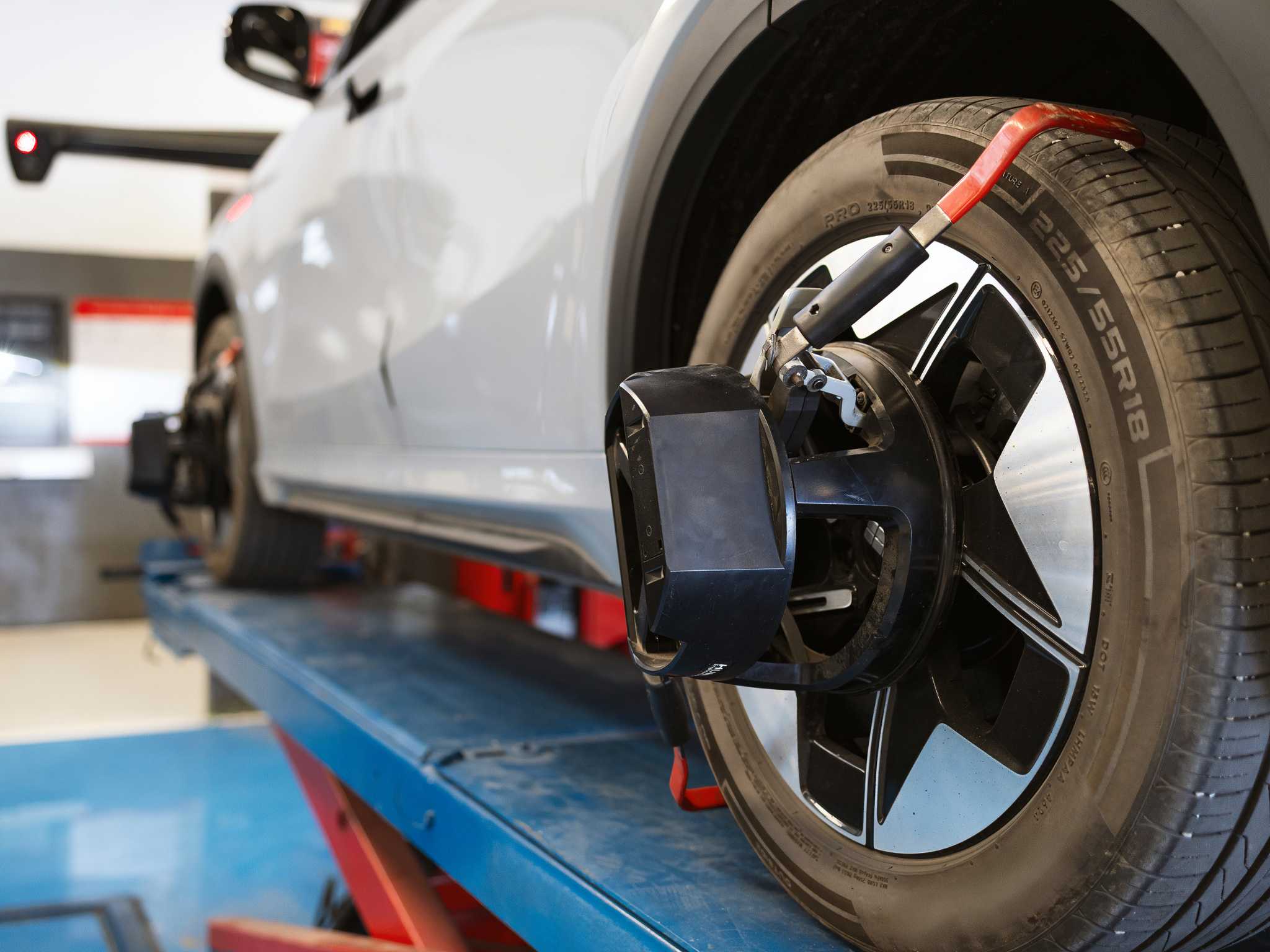
After a proper wheel alignment, the workshop should provide a before-and-after printout showing front and rear camber, front and rear toe, caster (where adjustable), and cross-camber and cross-caster differences. Most modern alignment machines use colour coding: green for within tolerance, red for out of range.
There are a few things worth checking on that printout:
Values should move from out-of-spec to within-spec after adjustment. If they do not, there is a reason, and the technician should explain it.
If a value cannot be adjusted into spec, common causes include bent components, seized adjusters, or impact damage.
If readings shift significantly during adjustment without any input from the technician, that can indicate movement in bushes or joints. The geometry is not stable.
An alignment printout confirms static angles. It does not confirm that those angles stay stable when the car is moving.
How suspension wear is confirmed
This requires a physical inspection, not a visual guess from the driver’s seat.
Ball joints and tie rod ends.
Checked for vertical and horizontal play using a hoist. Any measurable free play beyond manufacturer limits requires replacement. Play here directly affects toe stability.
Control arm bushes.
Inspected under load using a pry bar. Excessive fore-aft or lateral movement indicates worn rubber or separated hydraulic bushes. This is a common cause of diagonal or inner-edge wear on cars that spend a lot of time on rough suburban roads.
Shock absorbers and struts.
Checked for oil leakage, tested on a road test for excessive bounce, and measured on a suspension tester if one is available. Worn dampers are the classic cause of cupping.
Wheel bearings.
Checked for play and roughness. A bearing with movement can alter camber dynamically, creating a wear pattern that looks like an alignment fault but does not respond to alignment correction.
Subframe alignment.
On some vehicles, impact damage from a pothole or a kerb strike can shift a subframe slightly. This shows up as a cross-camber reading that cannot be corrected by normal adjustment.
If suspension components are replaced, the alignment must be reset afterwards. The new components change the geometry, and the previous alignment settings are no longer valid.
Working out which one you are dealing with
Before authorising new tyres and an alignment, there is a simple logic that helps avoid the most expensive mistake: paying for parts while the underlying fault remains.
Melbourne’s south-east and what it does to suspension
Local conditions are part of the equation. The roads through Rowville, Lysterfield, and Ferntree Gully include a mix of well-maintained arterials and suburban streets with speed humps, patchy surfaces, and the kind of drainage dips that load up suspension components thousands of times a year.
When tyres need to be replaced regardless of the cause
Regardless of what caused the wear, replace tyres if:
What to do if you notice uneven wear
Before you book new tyres, there are a few steps that protect you from paying twice.
Photograph the tyres before replacement
The wear pattern is evidence. Once the old tyres are gone, the evidence goes with them.
Request a full alignment check with a before-and-after printout
If the workshop does not provide one, ask why.
Ask whether suspension play was physically checked
An alignment reading alone does not confirm suspension health. The two inspections are complementary, not interchangeable.
Replace worn components before fitting new tyres
If a bush or a damper is worn, fitting new tyres first means the new rubber starts wearing unevenly from day one.
Re-align after any suspension repair
New components change the geometry. The previous alignment settings no longer apply.
FAQs
Only if the wear is caused by incorrect camber or toe and all suspension components are tight. If bushes or joints are worn, alignment alone will not solve it. The angles will shift again under load.
Typically every 10,000 to 20,000 km, or after suspension repairs, impact damage, or noticeable uneven wear.
Common causes include worn shock absorbers, unbalanced wheels, or loose suspension components. The wear pattern reflects movement rather than a fixed angle.
Some vehicles run factory negative camber and will show mild inner wear even when within specification. Excessive or rapid wear is not normal and should be investigated.
Yes, if components are worn. Fitting new tyres onto a car with worn suspension means the new set starts wearing unevenly from the first drive.
Yes. Over-inflation typically wears the centre of the tread. Under-inflation wears both shoulders. Both can be mistaken for alignment faults if pressure history is not checked.
Yes. Increased load alters rear camber and stresses rear suspension bushes, accelerating wear patterns on the rear axle.
No. Balancing corrects weight distribution in the wheel and tyre assembly. Alignment sets the angles at which the wheels meet the road. They address different problems.
FAQs
Australian Design Rules (ADR), Department of Infrastructure, Transport, Regional Development, Communications and the Arts