
Your phone rings at work. Your car is on the hoist, the workshop has found extra work, and they want an answer before they carry on.
You do not have to give one on the spot. The reply that works here is simple: put it in writing and I will call you back. A written quote shows you what the part is, what the labour is, and what happens if you leave it. A workshop that is happy to wait while you read it is behaving normally. One that pushes for a yes before you have seen anything has told you something useful.
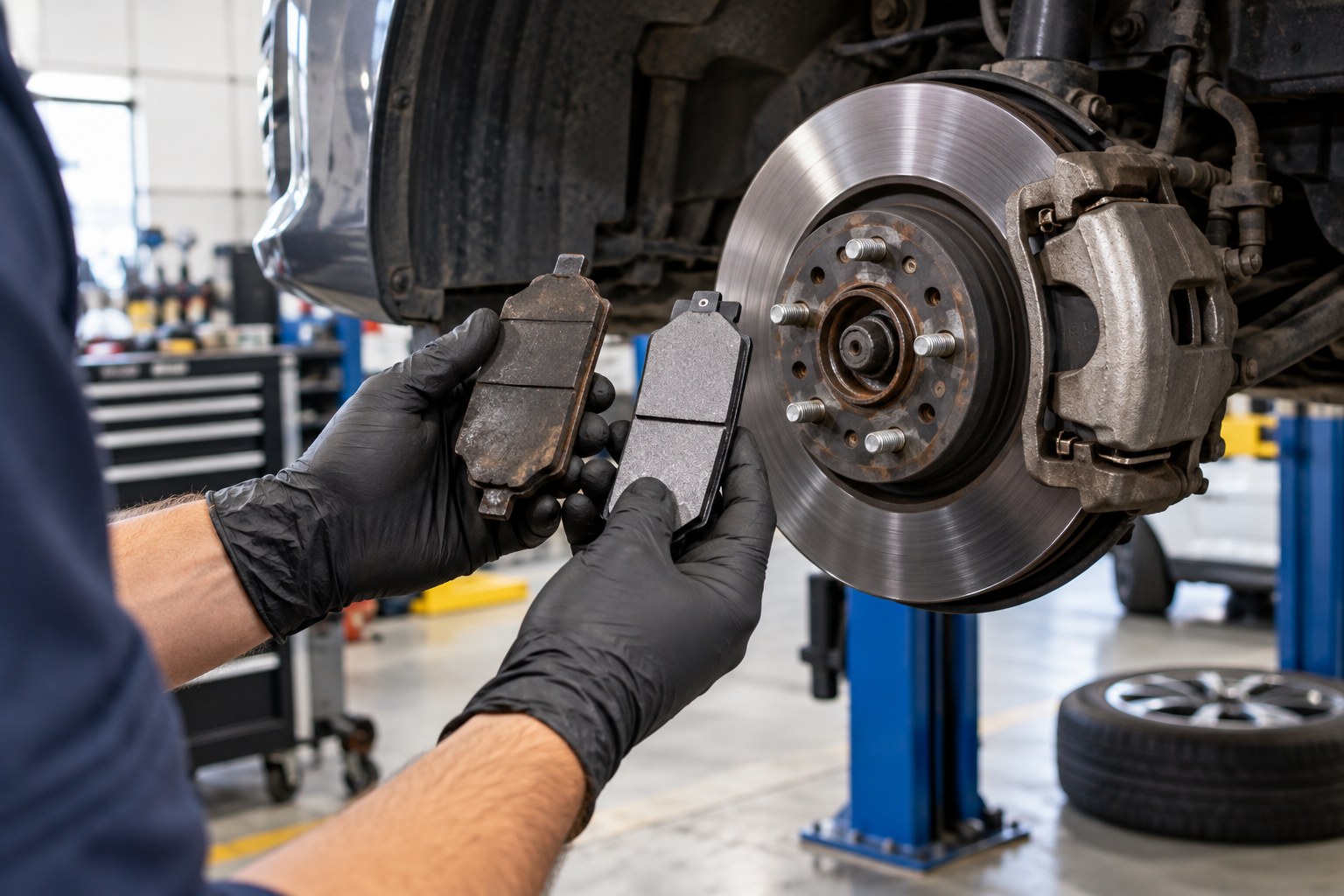
Because a service is half replacement and half inspection, and the inspection is the point. The car goes up on the hoist and the wheels come off.
The jobs that turn up mid-service are almost always the ones you cannot see from the driveway. That is why they arrive as a surprise rather than as a decision you had already made.
Brake pads are the clearest example. The only way to know how much friction material is left is to take the wheel off and measure it. The same goes for the lip that forms around the edge of a worn brake rotor.
A split CV boot is another. The CV boot is the ribbed rubber sleeve that keeps grease inside a driveshaft joint and grit out of it. A split one throws grease around the wheel arch, and the joint behind it wears out. Nobody sees that without turning the wheel to full lock.
Suspension bushes and shock absorbers give little away either. Rubber bushes perish with age and heat. A tired shock absorber goes damp with its own oil rather than failing outright. Both change how the car feels so slowly that you adjust to it instead of noticing it.
Slow leaks behave the same way. A weeping hose or gasket may show as nothing more than a wet film on the underbody. Air under a moving car spreads it thin before it reaches the driveway.
This piece picks up once the inspection has found something. For what gets checked beyond the oil and filter in the first place, there is a separate guide.

Plenty of workshops around Rowville will collect the car and leave a loan car. That is why this conversation happens at your desk, with the worn part several suburbs away. You cannot point at it, so you have to ask instead.
Five questions cover most of it.
Consumer Affairs Victoria suggests making it clear when you book that you must be called before any work you have not authorised. It also says to check that a job card you sign sets out the action to be taken.

Some work is safety-critical and some is condition-based, and a good workshop will tell you which it is looking at.
These should not wait. Brake pads worn down to the backing plate, or brakes that have started to grind. A leaking brake line or caliper, because brake fluid leaving the system can take the pedal with it. Play in a steering or suspension joint, such as a ball joint or tie rod end. A joint that separates takes a wheel with it. A wheel bearing that has begun to howl. A fuel leak of any size. A tyre with sidewall damage or with cords showing. Tread is a separate matter. It gets measured against a legal minimum, so a mechanic puts a gauge on it rather than guessing.
These can usually wait, with an eye on them. A shock absorber that is sweating rather than leaking. A hose or a gasket that is weeping rather than dripping. An air filter that is dirty but not blocked. Wiper blades. A battery that tests weak but still starts every morning. That one is better decided before winter than during it. A fluid change that is overdue by time on a car that has covered very few kilometres.
And some are a genuine judgement call. A cracked accessory belt. An oil leak in its early stages. A wheel bearing that is noisy but not yet rough. Any of these might run for another year, or might not last the month. A workshop that tells you plainly it is a judgement call is giving you a straight answer rather than dodging one.
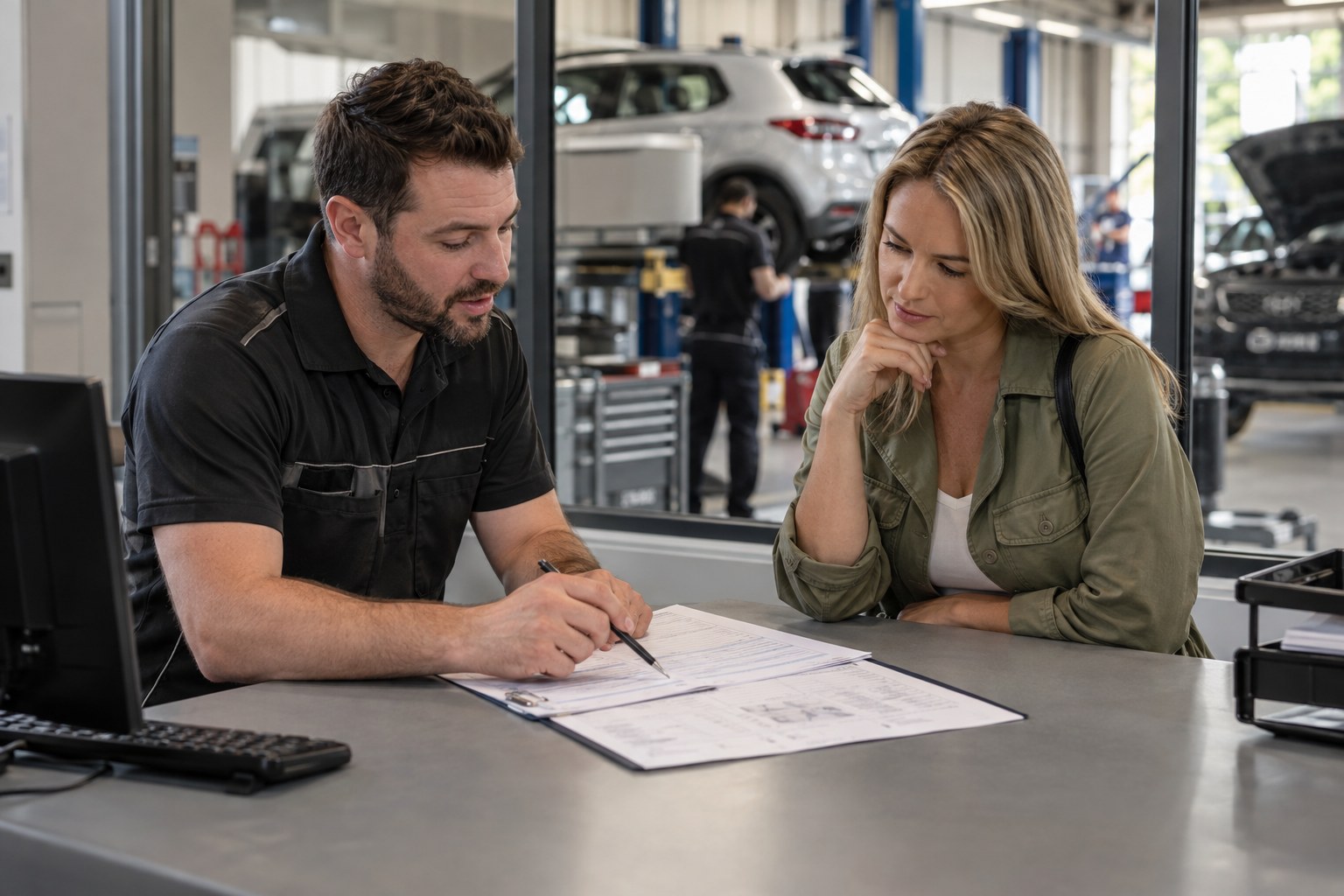
A fair quote is one you can check without being a mechanic. Parts and labour appear separately. The workshop’s hourly rate is stated. The job is described by what is being replaced rather than rolled into a single figure at the bottom of the page.
Consumer Affairs Victoria advises asking for a written estimate before having any work done. It says the estimate should cover five things.
A diagnostic charge should be set out too, and it helps to know what it pays for. It covers the time spent finding the fault, which is separate work from fixing it. An intermittent electrical fault can take longer to trace than the repair takes to carry out. Ask whether that charge comes off the repair if you go ahead. Some workshops do that and some do not.
Not sure which service your car went in for? You will find the difference between a minor and a major service set out on its own page.

Yes, and nobody should feel awkward about it. A second opinion on a repair bill is as ordinary as a second quote on a roof.
The written quote is what makes it possible. A verbal figure cannot be compared against anything. The next workshop has no way of knowing what was counted into it.
Two practical things are worth settling first. You may be charged for the first workshop’s diagnostic time, which is fair enough, since that work has been done. And a car pulled apart to find a fault may need putting back together before it can be driven. That is labour too. Ask about both before you decide.
A second opinion earns its keep on a large job. On a small one, the running around can outweigh the difference.
They should not. Say at the outset that you expect a phone call before anything new is started, and put the same thing on the job card. Two records of one instruction leave no room for argument later.
No. Asking for the quote in writing and ringing back is a normal thing to do. A workshop used to dealing with the public will expect it. A safety fault is the exception, and there the car is better left where it is anyway.
Say so, and ask which items come first. Once a workshop has sorted the safety work from the condition work, it can put the list in order for you. The rest waits for the next visit.
Watch how they handle being questioned rather than what they recommend. Good work survives a written quote, a pause while you read it, and a second look from somebody else. Pressure to decide on the spot is the signal worth noticing.
The call is easier to take if you have settled your answer before the phone ever rings. In writing, then a read, then a yes or a no. Before any extra work starts, ask for a written quote from ZPro Automotive. Then the decision is not one you have to make in ninety seconds with the car somewhere else.

