
A soft brake pedal is best sorted by when it goes soft, not by how soft it feels. Soft every time you press it, from cold, points to air in the lines, a fluid leak or a worn master cylinder. That needs looking at today. Firm in normal driving but long and soft after a few hard stops or a long hill is heat getting into tired brake fluid. That is a booking, not an emergency.
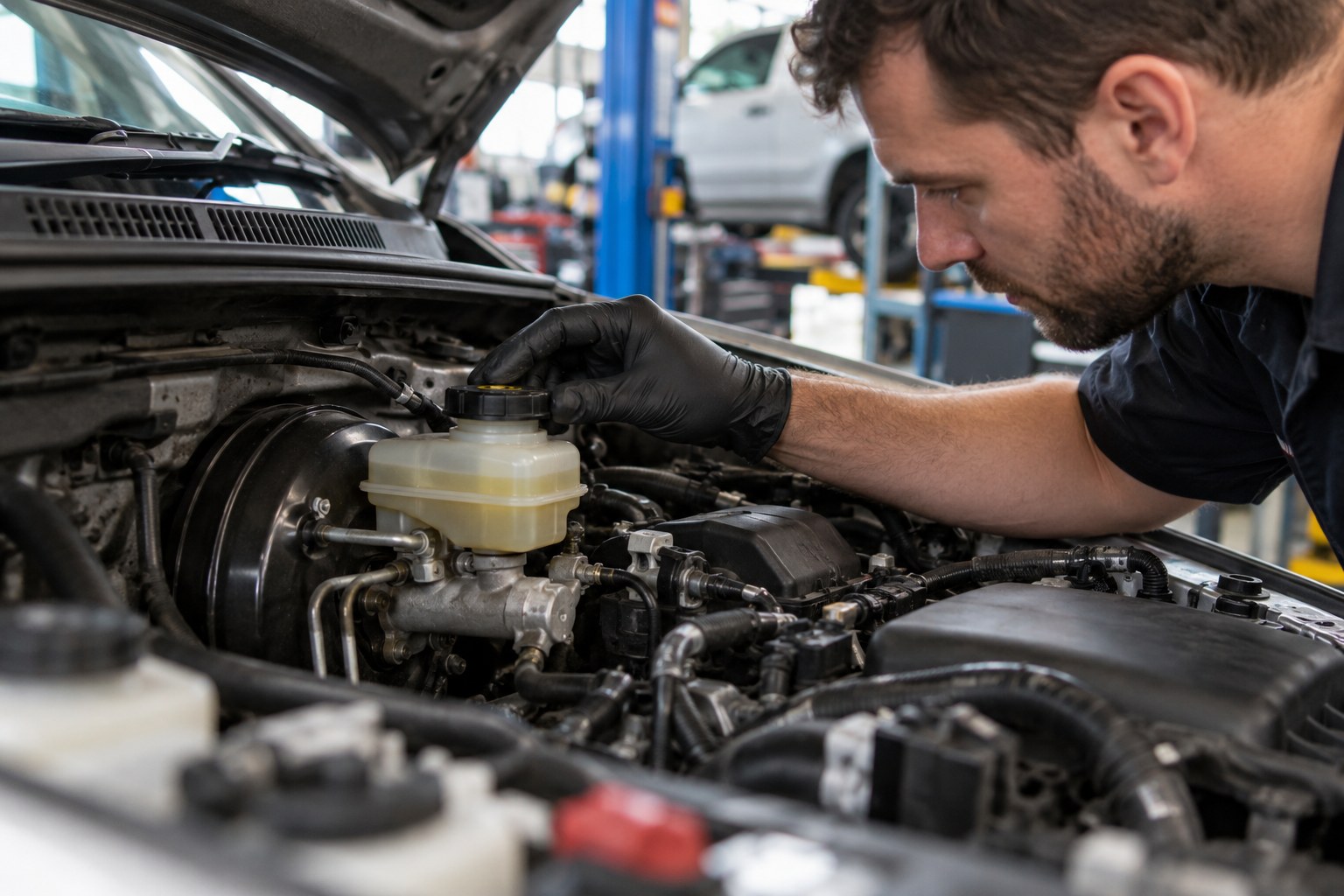
A soft pedal means some of your effort is going somewhere other than the brakes. Here are the usual causes, most common first.
If the brakes are grinding or squealing as well, what your brake noise means is answered on its own.
With the car stopped, pump the pedal two or three times. If it firms up, that points to air rather than to worn brakes. Even so, worn pads are worth ruling out first.
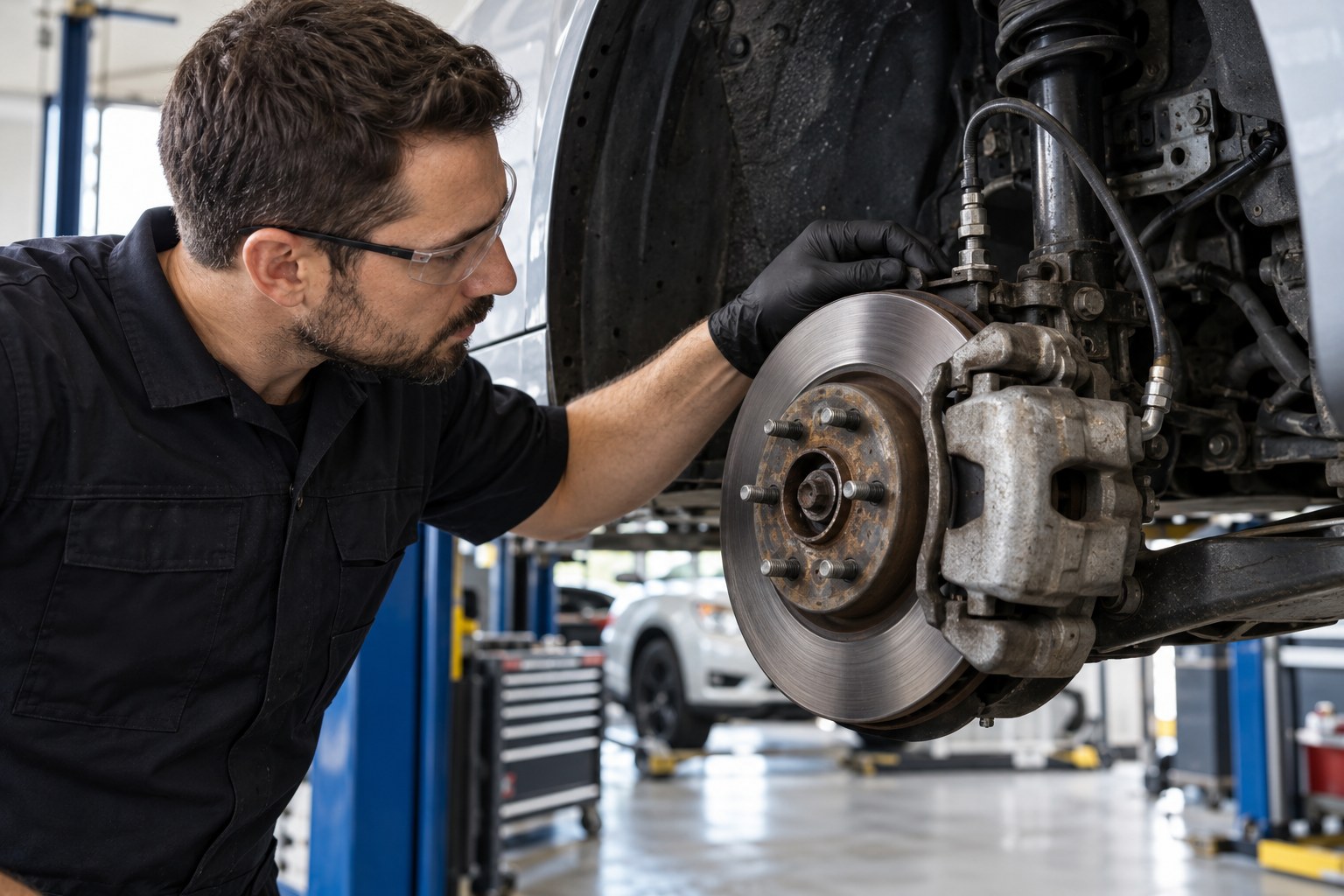
Your brakes are hydraulic, which means they work by pushing fluid through sealed lines rather than by pulling a cable. Press the pedal and it pushes brake fluid out to each wheel, where the fluid pushes the pads against the disc.
One property makes that work. Fluid does not squash. Air does. Push on a sealed line full of fluid and all of that push arrives at the far end. Add a bubble of air or vapour and the push squashes the bubble first, so some of your effort never reaches the pads. A spongy pedal is the feel of that.
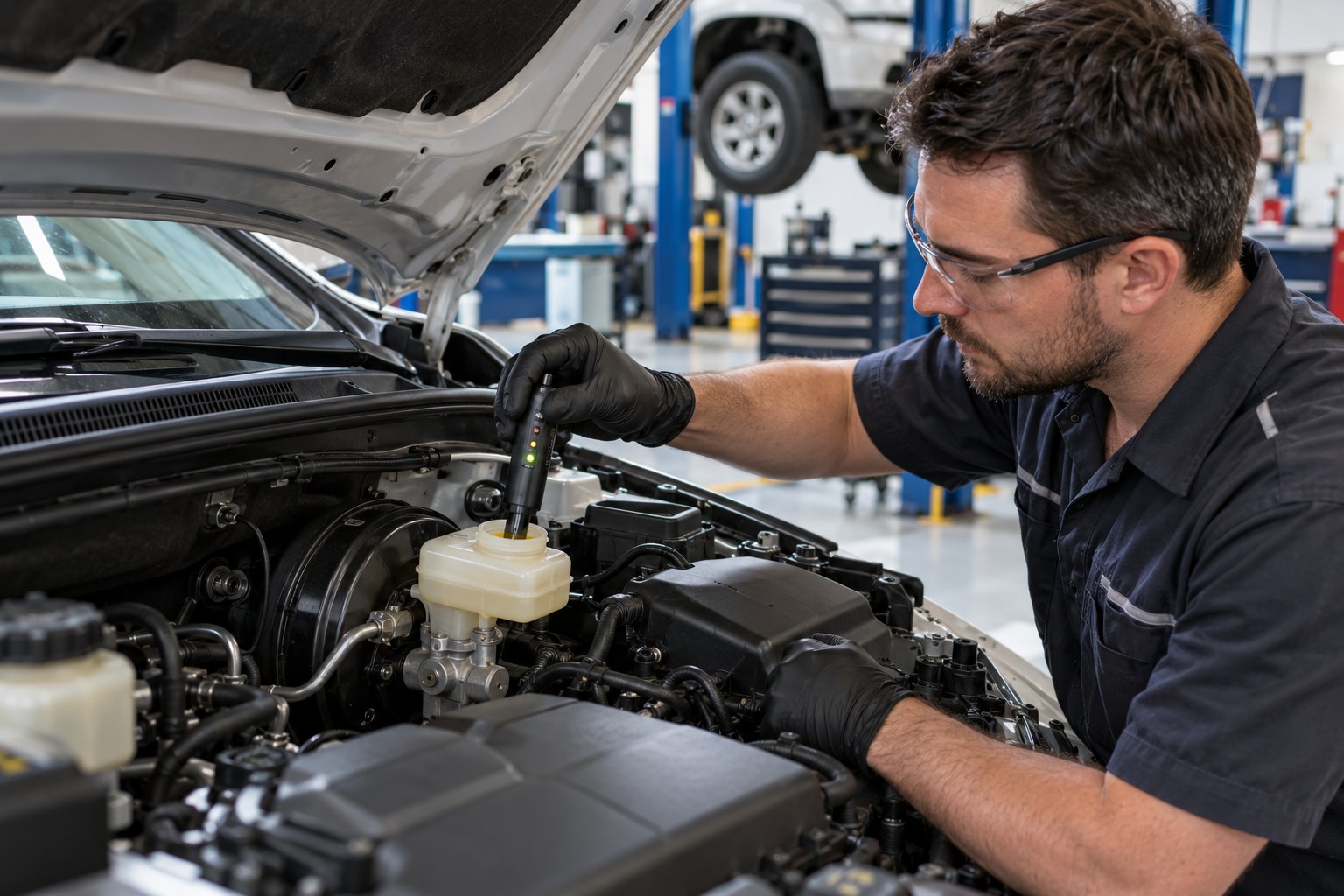
Brake fluid is hygroscopic, which is a long word meaning it pulls moisture out of the air. It does this slowly, through the seals and the reservoir cap, whether the car is driven hard or parked. The RACQ says the same: brake fluid absorbs moisture from the atmosphere, which reduces its boiling point and corrodes brake system components.
The boiling point is the part that reaches your foot. Braking turns movement into heat, and that heat goes into the pads, the discs and the fluid. Water boils at a far lower temperature than brake fluid, and boiling water becomes vapour, which squashes just as air does. That is why tired fluid goes long after repeated hard braking, not on the first stop of the day, and firms up again once the brakes cool.
The run down from the Dandenongs is where most local drivers meet this. A full car on the Mount Dandenong Tourist Road, brakes on most of the way, puts more heat into the fluid than a fortnight of shopping trips.
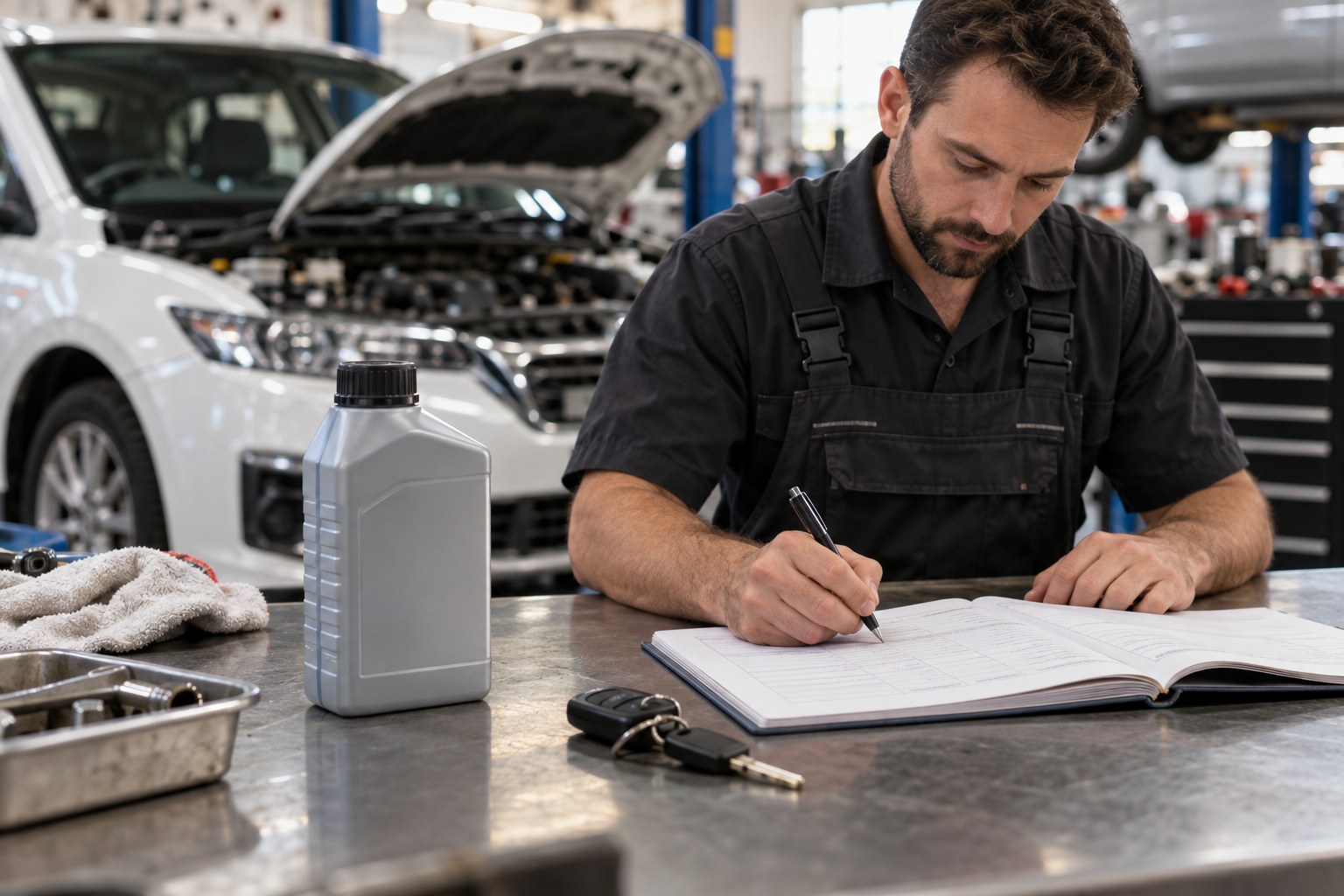
Around every two years, and the kilometres on the clock do not change the answer. The RACQ puts it plainly: most vehicle manufacturers recommend change intervals of around two years, irrespective of kilometres travelled. Your logbook is the final word for your own model.
Fluid takes on moisture through time and contact with air, not through use. That puts it with the other time-based service items on cars that barely move. A low-kilometre car is the worse case here, not the better one.
It is also the job most often skipped, because nothing on the dashboard tells you the fluid is due. Plenty of cars are still running the fluid they left the showroom with.
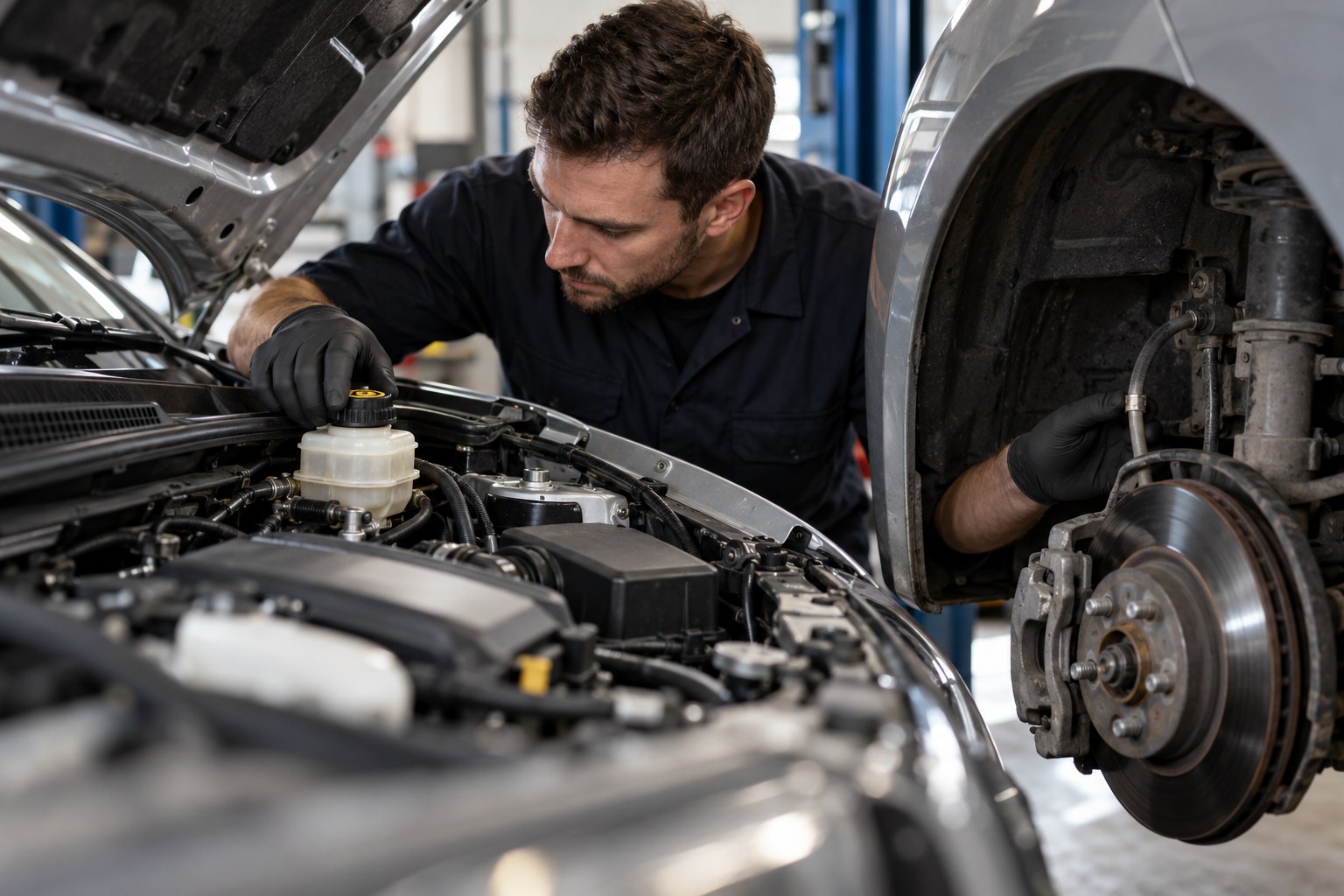
Most soft pedals are not an emergency. Work out which of these three you are in.
The brake warning light covers the handbrake being up as well as a low fluid level, so check the handbrake first. If it is down and the light stays on, treat it as the do-not-drive case.
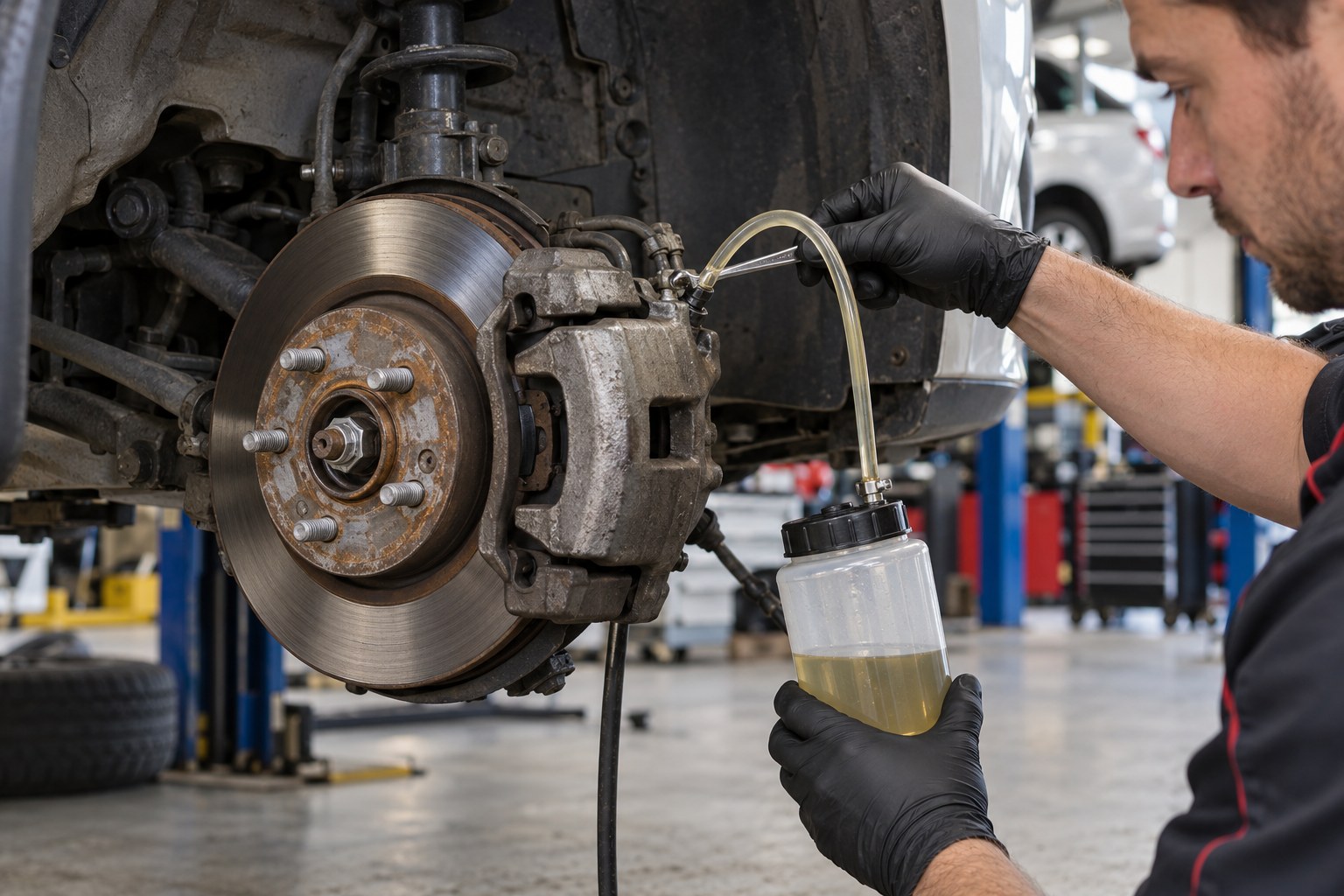
From your side it is a short job. The old fluid comes out, fresh fluid of the specification your car calls for goes in, and the brakes get looked over while the wheels are off. It is usually an hour or so rather than a day, and the workshop matches the specification to the car.
A brake fluid change, sometimes called a brake system flush, usually starts at around $70 and can run past $120, according to AutoGuru’s Australian repair pricing. Where yours lands depends on the size of the system and what else turns up.
None of this has to be guesswork. Moisture content can be measured with a test strip or a tester. A workshop can then tell you whether your fluid is genuinely due, rather than going by the calendar.
Waiting rarely saves money. The moisture that lowers the boiling point also eats at the metal it sits against, so a cheap service left long enough becomes a repair. If your pedal has changed, or you cannot remember the last fluid change, book a brake check with ZPro Automotive before the next long descent.
It depends on when the sponginess shows up. A pedal that only softens after heavy braking, and feels normal otherwise, is usually fine for short gentle trips while you wait for a booking. A pedal that is soft on every press, or that keeps travelling while your foot stays still, means the car should stop where it is.
The water the fluid has collected keeps building up, so the temperature at which it boils keeps dropping. The pedal starts going long under heat sooner each year, and the same water attacks the metal parts of the system from the inside.
Because you are losing part of your pedal effort to something compressible, not all of it. Whatever pressure is left still reaches the pads, so the car slows down, just later and with more travel than you expect.
Expect a starting point near $70. Plenty of cars sit above that and head past $120 once the size of the system and any extra work are counted. Ask for it alongside a brake inspection, since the wheels come off either way.

