
You’ve found a buyer for your Corolla Hybrid, or your Tesla needs a roadworthy before it can be re-registered. You ring the workshop that did your last petrol car, and they tell you they can’t do it. They’re not being difficult. Since 1 September 2026, an EV roadworthy in Victoria can only be done by a licensed vehicle tester whose licence covers electric and hybrid vehicles.
Petrol and diesel roadworthies haven’t changed. Electric cars, plug-in hybrids and most hybrids now need an EV-accredited tester, extra equipment and an extra checklist. Our Rowville workshop, ZPro Automotive, is on Transport Victoria’s list of approved EV testers, so we’ve been through the new requirements ourselves.
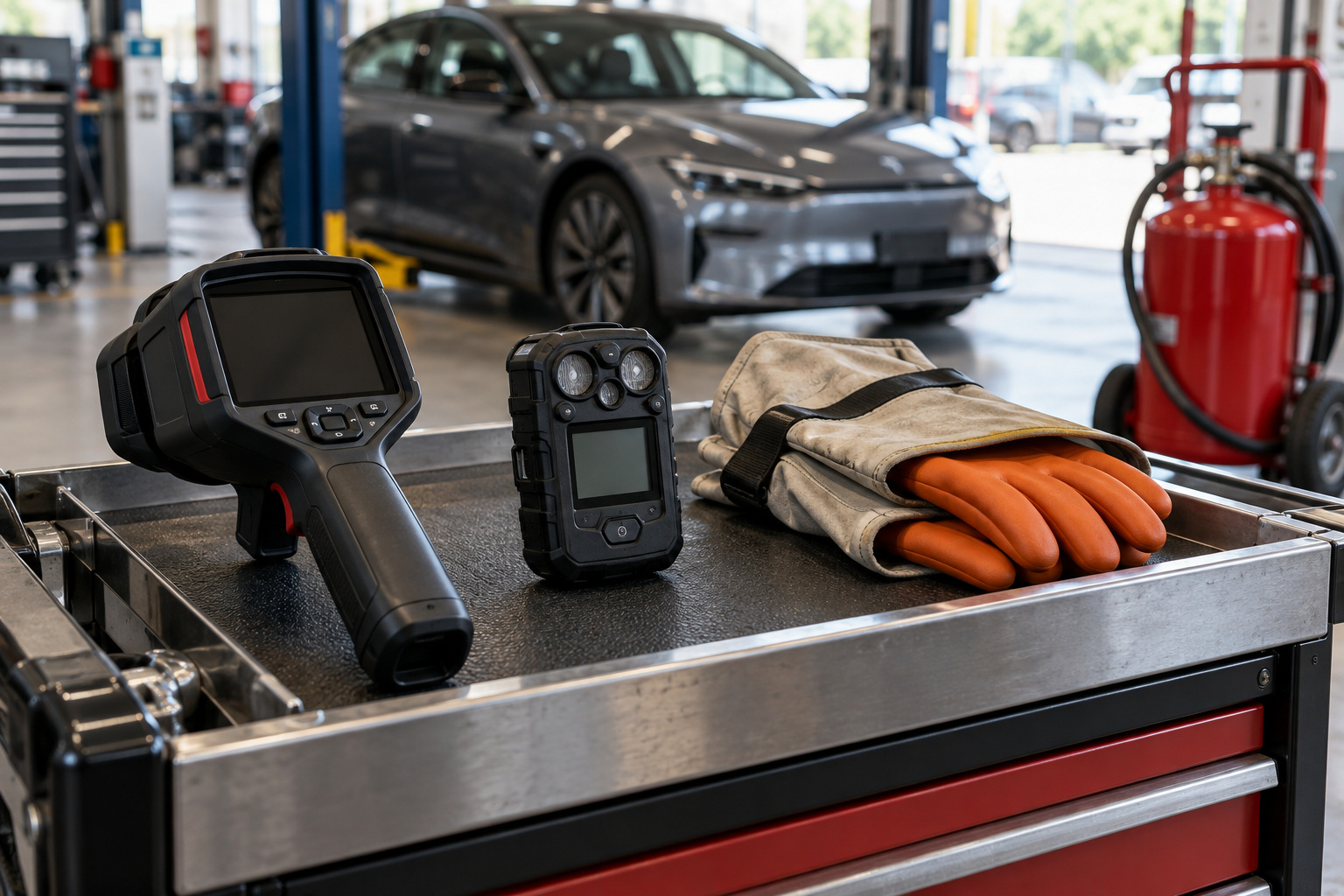
An EV roadworthy is a roadworthy certificate (RWC) inspection on an electric or hybrid vehicle. From 1 September 2026, Transport Victoria requires two things before one can be issued:
To get EV accreditation, a mechanic completes a nationally accredited unit on safely depowering electric or hybrid vehicles. They then complete the LVT EV Awareness training that Transport Victoria requires. Box Hill Institute, Chisholm Institute, Federation University and Kangan Institute all run the courses.
The workshop also has to meet extra equipment and premises rules. These include a thermal imaging camera that reads from 20°C to 400°C, a carbon monoxide meter that can detect 35 parts per million, a fire extinguisher of at least 9 kg and electrical hazard warning signs. The training certificates and equipment evidence then go to Transport Victoria before the EV category is added to the licence.
The EV category doesn’t change roadworthies for petrol or diesel cars. LPG cars still need a tester with the separate LPG accreditation, the same as before.
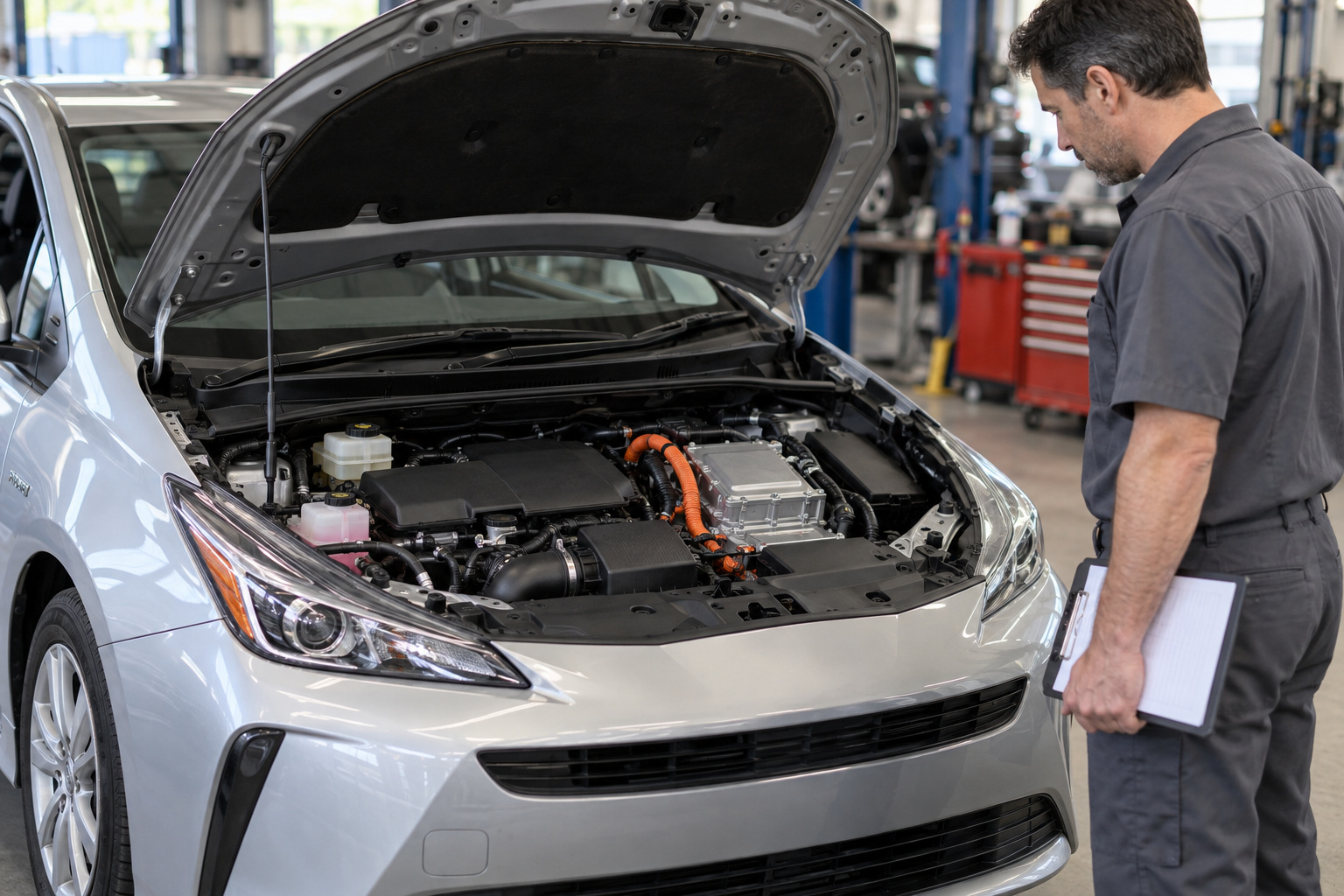
Most hybrids need an EV-accredited tester. The EV category covers vehicles with an electric or electrically assisted drive system that runs at 60 volts DC or more. That takes in full electric cars, plug-in hybrids and most self-charging hybrids.
The badge on the boot isn’t always a reliable guide. Some cars sold as hybrids run a 12-volt or 48-volt system. If the drive system runs below 60 volts DC, the car falls outside the EV category. If you’re unsure, give us the make, model and year when you book and we’ll confirm which inspection your car needs.
| Vehicle type | Common examples | EV-accredited tester needed? |
|---|---|---|
| Battery electric (BEV) | Tesla Model 3 and Model Y, BYD Atto 3, MG4 | Yes |
| Plug-in hybrid (PHEV) | Mitsubishi Outlander PHEV, BYD Sealion 6 | Yes |
| Self-charging hybrid | Toyota Corolla Hybrid, Camry, RAV4 Hybrid | Yes |
| Mild hybrid (12 or 48 volt) | Some recent small cars and European models | Usually no |
| Petrol, diesel or LPG | Most other cars | No |
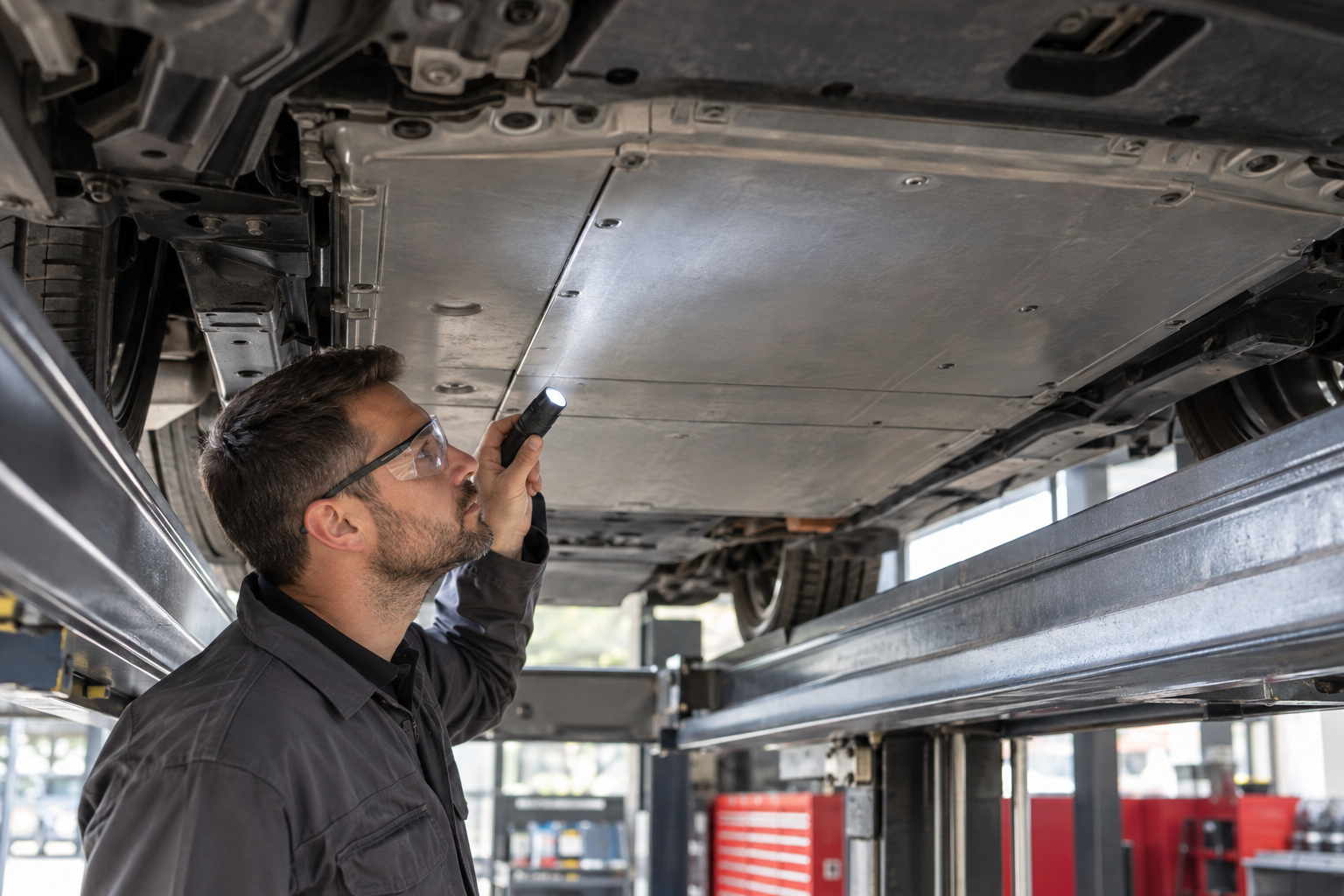
An electric or hybrid roadworthy covers everything a standard roadworthy does, plus a mandatory EV checklist. The standard items are the ones Transport Victoria lists for every car: wheels, tyres, steering, suspension, brakes, seats and seatbelts, lights, windscreen, wipers and the body structure.
On top of the standard items, the tester follows the extra safety requirements in Transport Victoria’s written directions and completes the EV checklist. These checks are done by a mechanic trained to work safely around high-voltage systems, using the test equipment the EV category requires.
An EV roadworthy is a look-and-test inspection. The EV category covers visual checks and testing only. It doesn’t cover removing, repairing or replacing high-voltage parts.
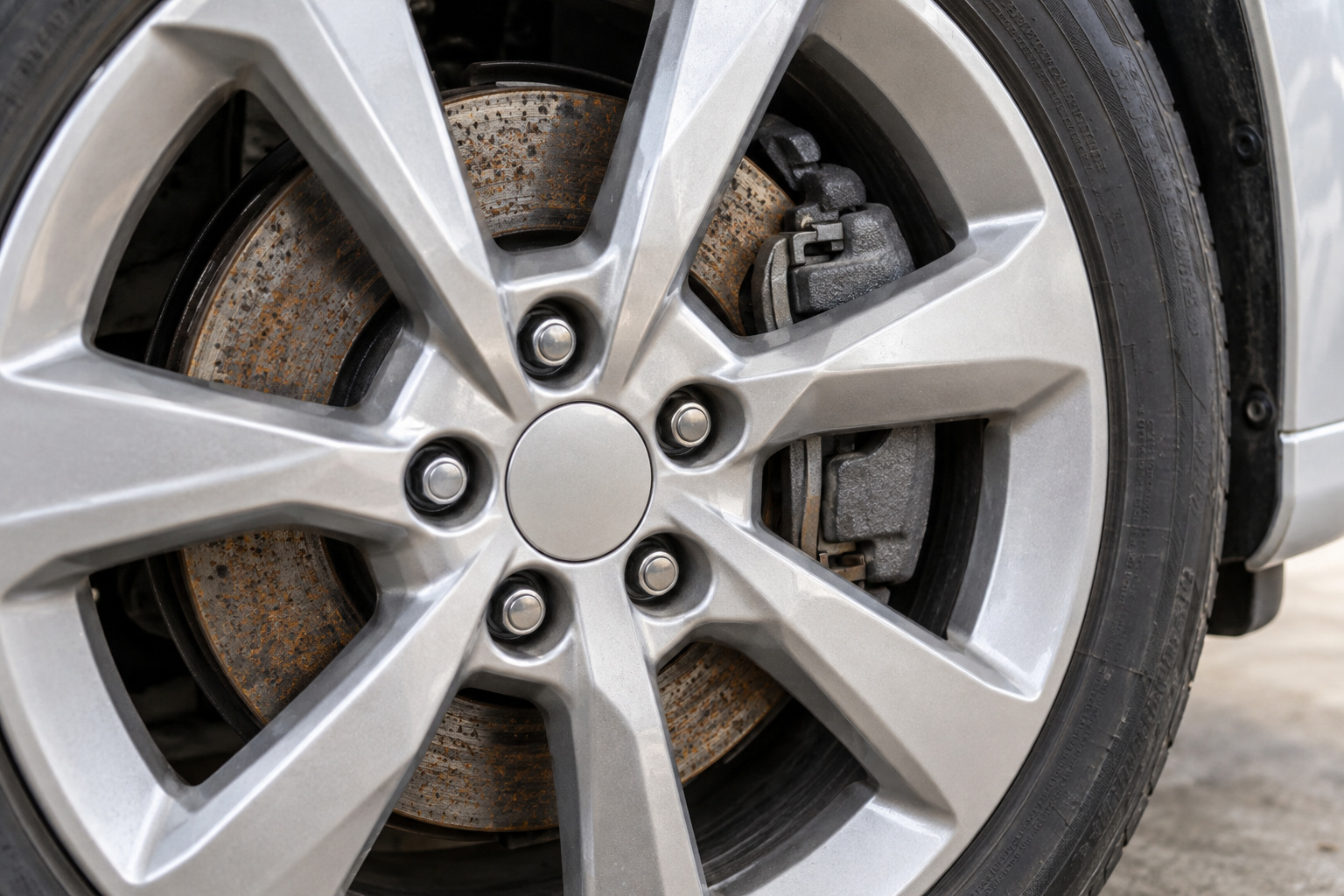
EVs and hybrids mostly fail on the same things as any other car. Two items are worth a closer look on electric cars because of how they brake and how heavy they are.
Rusty or pitted brake discs. Regenerative braking slows the car using the electric motor, so the friction brakes do less work. Discs that rarely get used can rust and pit, and badly pitted discs can fail the brake check.
Worn tyres. EVs are heavy and deliver strong torque from a standstill, so tyres can wear faster than owners expect. A roadworthy needs at least 1.5 mm of tread in the main grooves.
If the inspection finds a problem in the battery or high-voltage wiring, the repair may need the car’s dealer or a high-voltage repair specialist. We’ll tell you which, and why, before anything else happens.
If your car fails, Transport Victoria gives you 14 days to fix the listed items and have it checked again. After 14 days, you’ll need to pay for a new inspection.
Transport Victoria publishes a separate list of approved EV tester locations, apart from its general roadworthy tester map. The list is updated regularly, so check the latest version on the Transport Victoria website.
Fewer workshops are on the EV list because the training and equipment take time and money. Our Laser Drive workshop is one of two approved EV testers in Rowville on the current list. Because the list changes as more workshops are approved, check the latest version before you book.
Before you book anywhere, ask one question: does your LVT licence include the EV category? A workshop without it can’t issue a roadworthy for an electric or hybrid car, however good its mechanics are.
If you’re selling, book early. A roadworthy is only current for 30 days from the day it’s issued, and EV tester bookings are spread across fewer workshops.
A few minutes of preparation can save a second visit. Before you bring the car in:
Charge it. Arrive with enough charge for the road test and brake test.
Check the dashboard. Look for warning lights on safety systems such as ABS brakes, stability control and airbags. These systems need to work properly to pass. Have any high-voltage system warning diagnosed before the inspection too.
Look at the tyres and discs. Check tread depth and look for rust on the brake discs through the wheels.
Tell us about past damage. Mention any accident repairs or hard knocks to the underside of the car.
Roadworthy prices vary with the car’s age, type and condition, so ask for a quote when you book.
To book an EV roadworthy at our Rowville workshop, call 03 9763 4633 or book online. Tell us the make, model and year so we can confirm the inspection type. If you can’t get the car to us, ask about local pick-up and drop-off across Rowville, Knoxfield, Lysterfield, Scoresby and Wantirna South.

