
An electric or hybrid roadworthy is the ordinary safety inspection plus extra checks on the high voltage system. Those extra checks are visual examination and testing only. A pass records roadworthiness on the day of the examination, not the health of the battery.
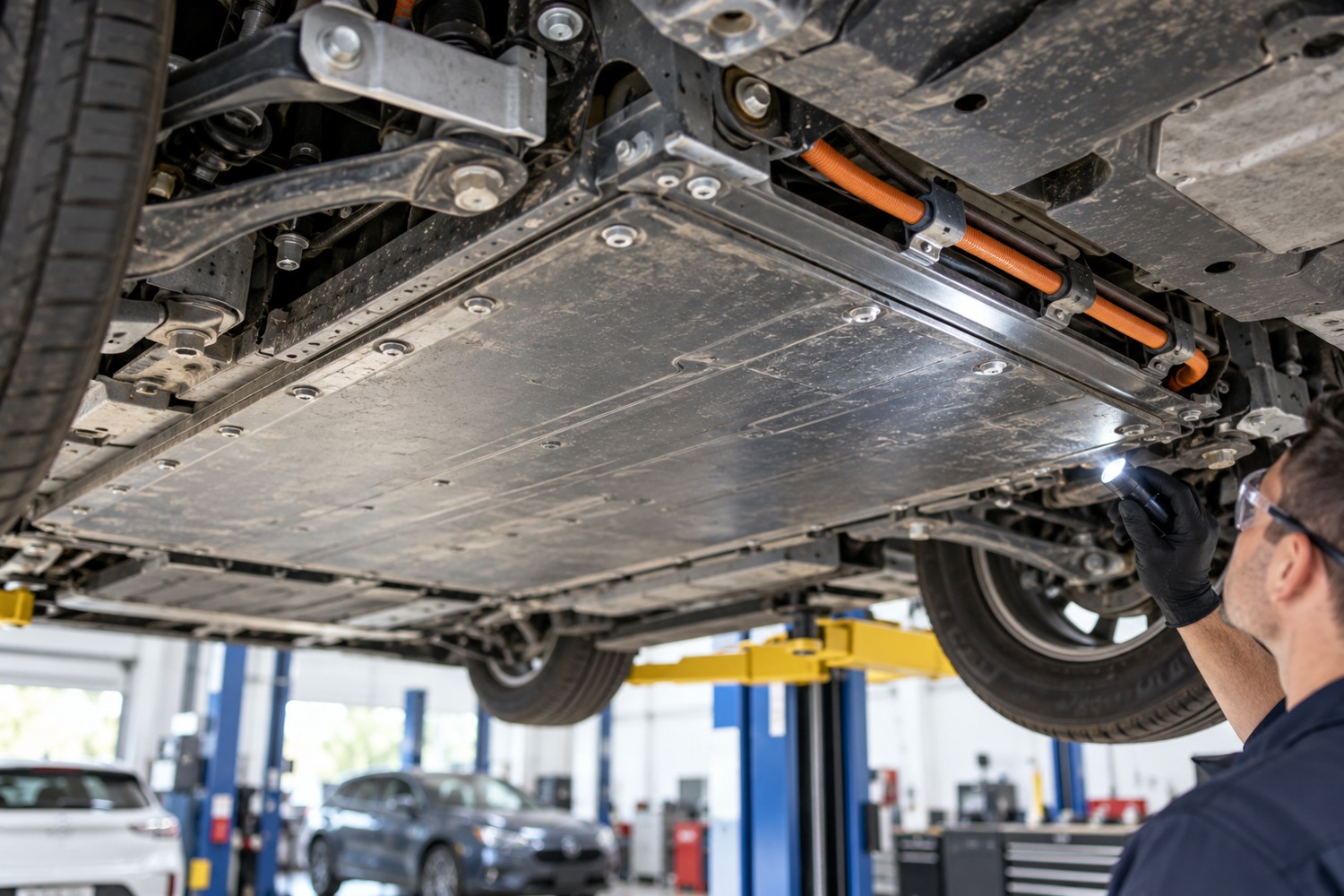
The extra checks cover the parts that carry high voltage, and the battery from the outside. The high voltage system is the one that drives the car. It is separate from the small battery that runs the lights, the radio and the locks.
The battery pack sits in a casing, usually under the floor. The tester looks at that casing for impact damage. The mounts holding it in place are checked as well. Knocks to the underside of the car are what this picks up.
High voltage cables run between the battery, the motor and the power electronics. They are checked for damage, for rubbing where they pass through the body, and for secure mounting. The high voltage warning labels and the isolation points are looked at too. An isolation point is where the high voltage system can be disconnected.
A temperature reading is taken at the surface of the battery when the car comes in. That is one reading at intake. It is not a scan of every cable, connector and control unit.
The licence conditions require an EV checklist for every electric or hybrid car examined for a certificate. The mechanic completes it and uploads it as evidence. That EV roadworthy checklist is a tester’s document. Its item list is not something an owner can look up. So take the checks above as what the inspection covers, rather than as a copy of the checklist.
There is a firm limit on all of it. The EV class on a tester’s licence permits visual examination and testing of cars with high voltage parts. Removing, repairing, replacing or modifying those parts sits outside the class. So the inspection records what could be seen and tested that day. It does not measure how much capacity is left in the battery. It is not a battery condition report.
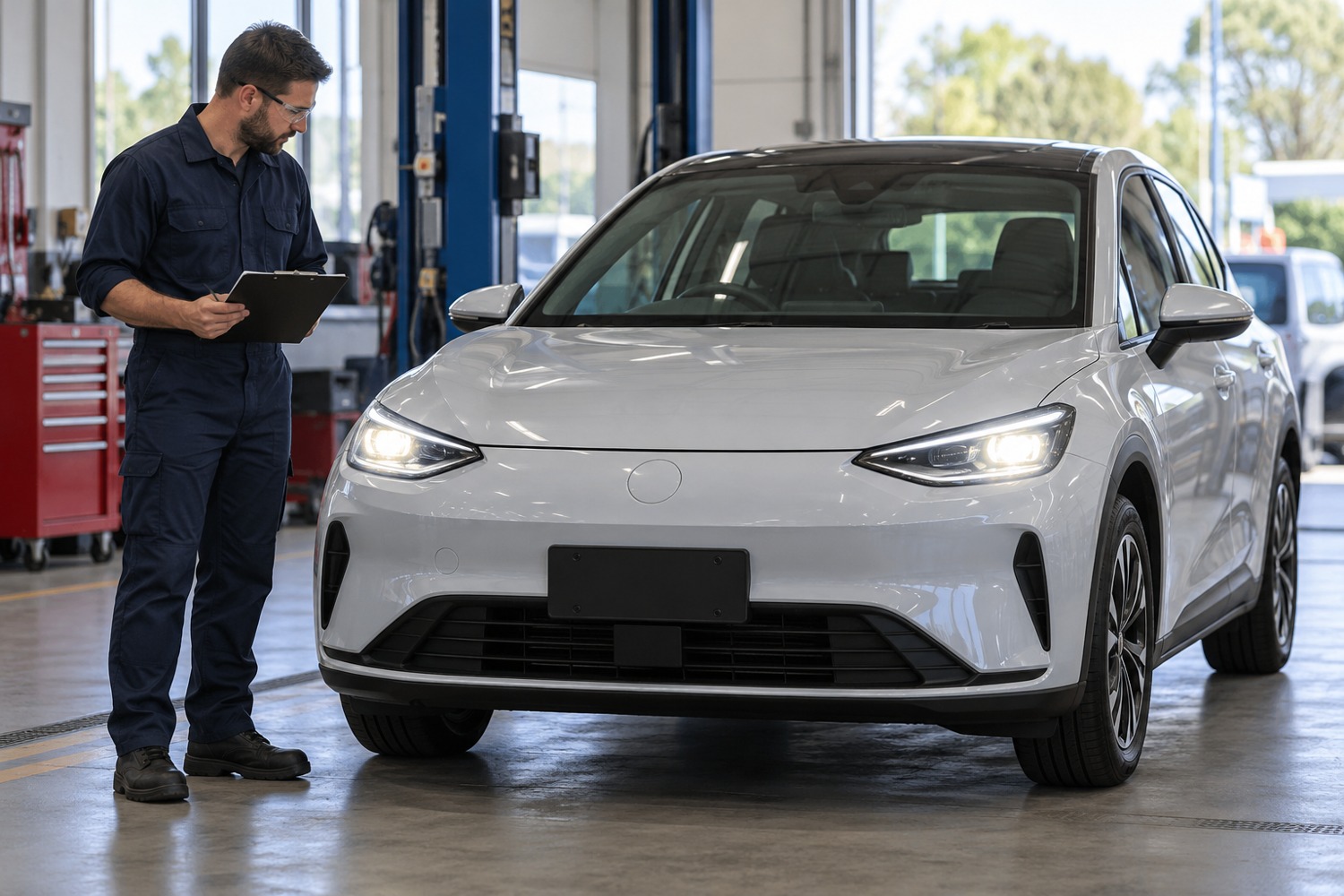
Yes. The high voltage checks are added to the ordinary inspection, not swapped for part of it. An electric car has to pass the same safety items as a petrol one. Those items are set out in the ordinary roadworthy checklist. None of them is waived because a car runs on a battery.
Two requirements are worth naming. The licence conditions require a road test on every car presented for a certificate. The same mechanic who examines the car does the road test. It has to be long enough to warm the car up, and to help pick up fluid leaks, emissions or handling problems. A brake test with suitable calibrated equipment is required as well.
One thing does change. The workshop’s licence has to carry the EV class before it can issue the certificate.
No. Regenerative braking slows the car with the electric motor. Some of that energy goes back into the battery.
Renault’s manual for one of its electric models puts the limit plainly. Regenerative braking ‘should under no circumstances be used as a substitute for the brake pedal’. How strong it feels differs between models, and some cars let the driver change it.
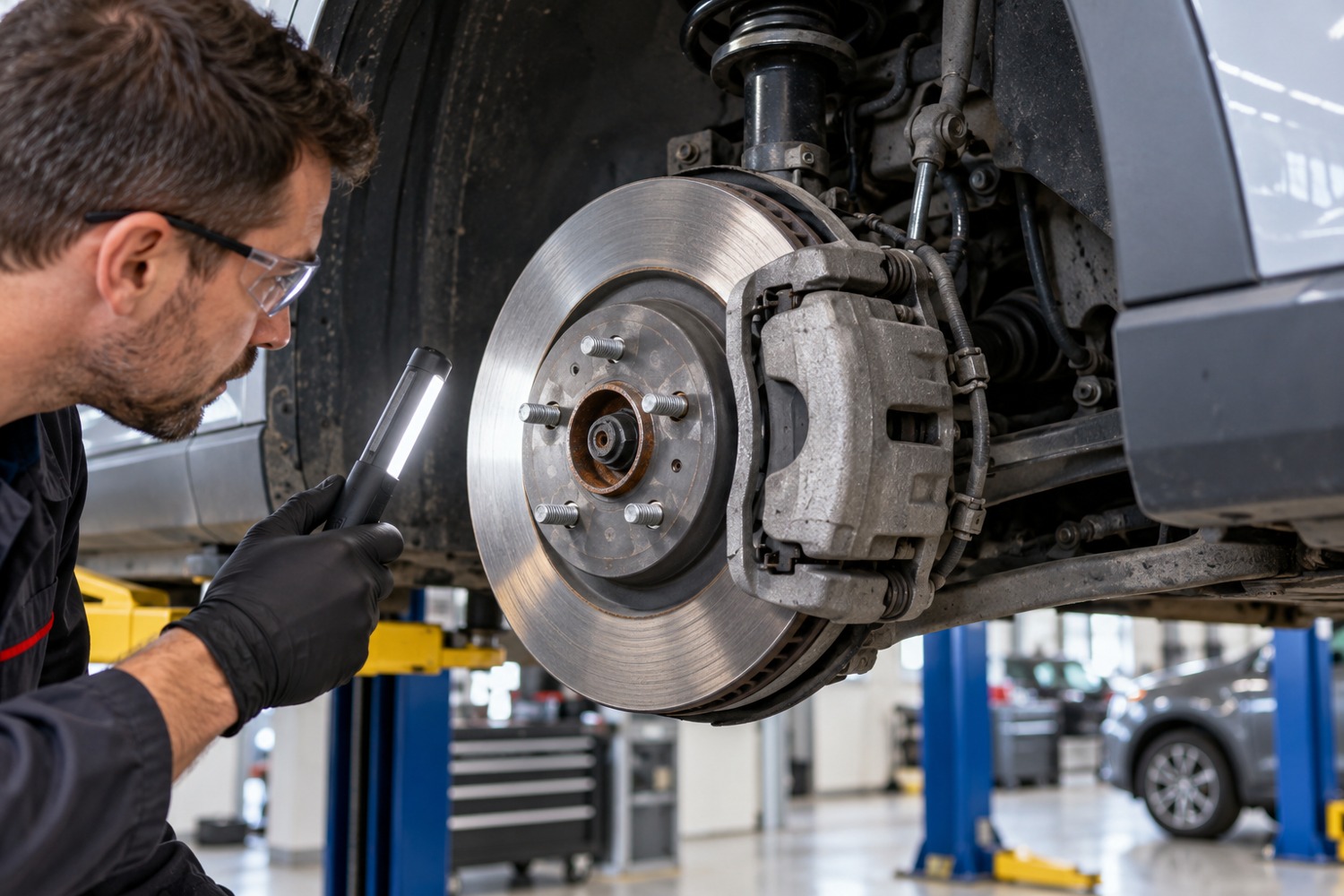
The friction brakes are the ordinary ones, where pads press against a disc. They are still fitted, still used and still tested. Lighter use does not take them out of the inspection. The brake test applies to an electric car the same as to any other.
A soft or spongy pedal is a different question from the inspection. If that is what you have noticed, what brake fluid does covers it.
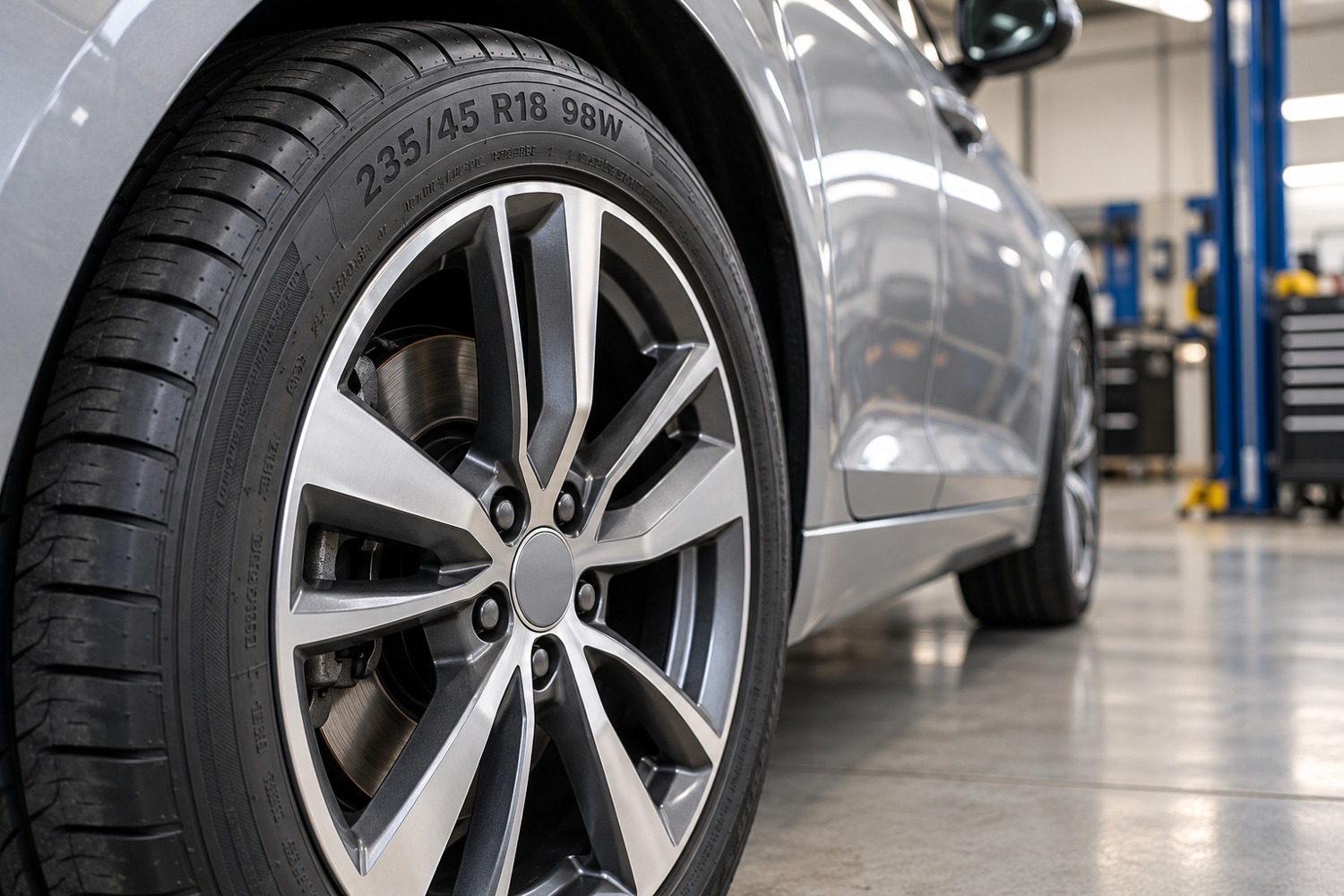
Yes. The tyres still have to suit what the car asks of them. Michelin Australia’s electric vehicle FAQ puts the condition in one line. As long as load capacity and speed rating requirements are observed, its ordinary tyres work on an electric car.
Load capacity is how much weight a tyre is built to carry. The speed rating is the speed it is built for. Both are marked on the sidewall.
Two things follow. An electric car does not need a special branded tyre to be roadworthy. It does need tyres that match those two requirements and are not worn out.
What drives the car makes no difference to that part of the inspection. If the wear looks heavier on one edge than the other, uneven tyre wear explains what tends to cause it.
Thirty days. The Road Safety (Vehicles) Regulations 2021 set that out. They define a current certificate of roadworthiness as one issued not more than 30 days previously. An electric or hybrid car sits under the same definition as any other.
That is a rule about dates and nothing else. It is not a warranty on the battery. It is not a promise about the car for the month that follows.
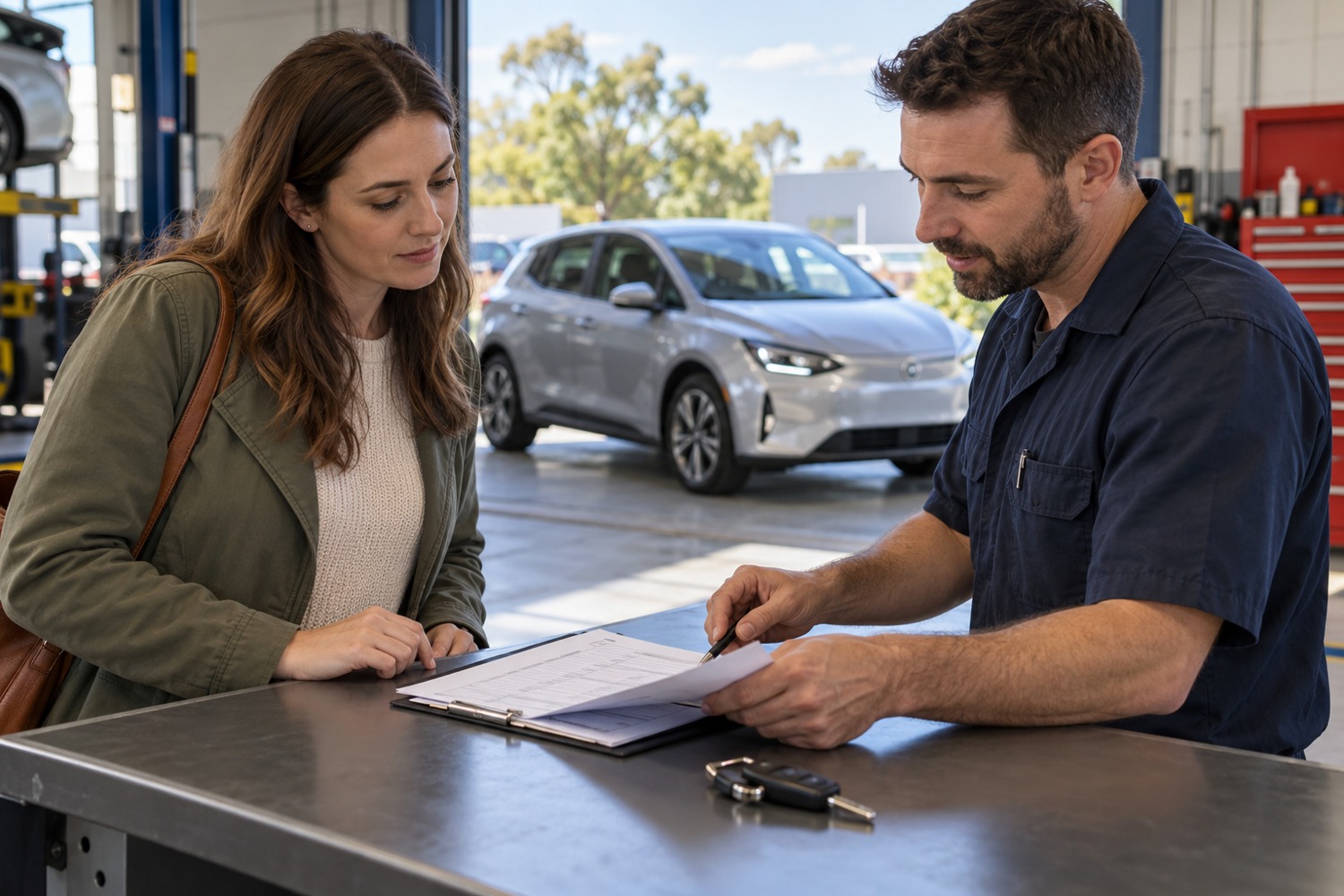
Driving an electric or hybrid car around Rowville and due for a certificate? Our EV and hybrid roadworthy inspections cover the ordinary items and the high voltage checks in the one visit.
No. Looking at a casing and reading a surface temperature cannot show how much charge a pack still holds. That answer comes from a separate test, booked for that reason.
Yes. Every car presented for a certificate has to have its brakes tested with proper equipment. Nothing about an electric motor changes that.
No. The class is an authority to look and to test, not to work on the parts. A repair is a separate job from the inspection that found the problem.
No. One surface reading on one day is an observation, not a diagnosis. Working out the state of a pack is a separate job, and a roadworthy does not include one.

